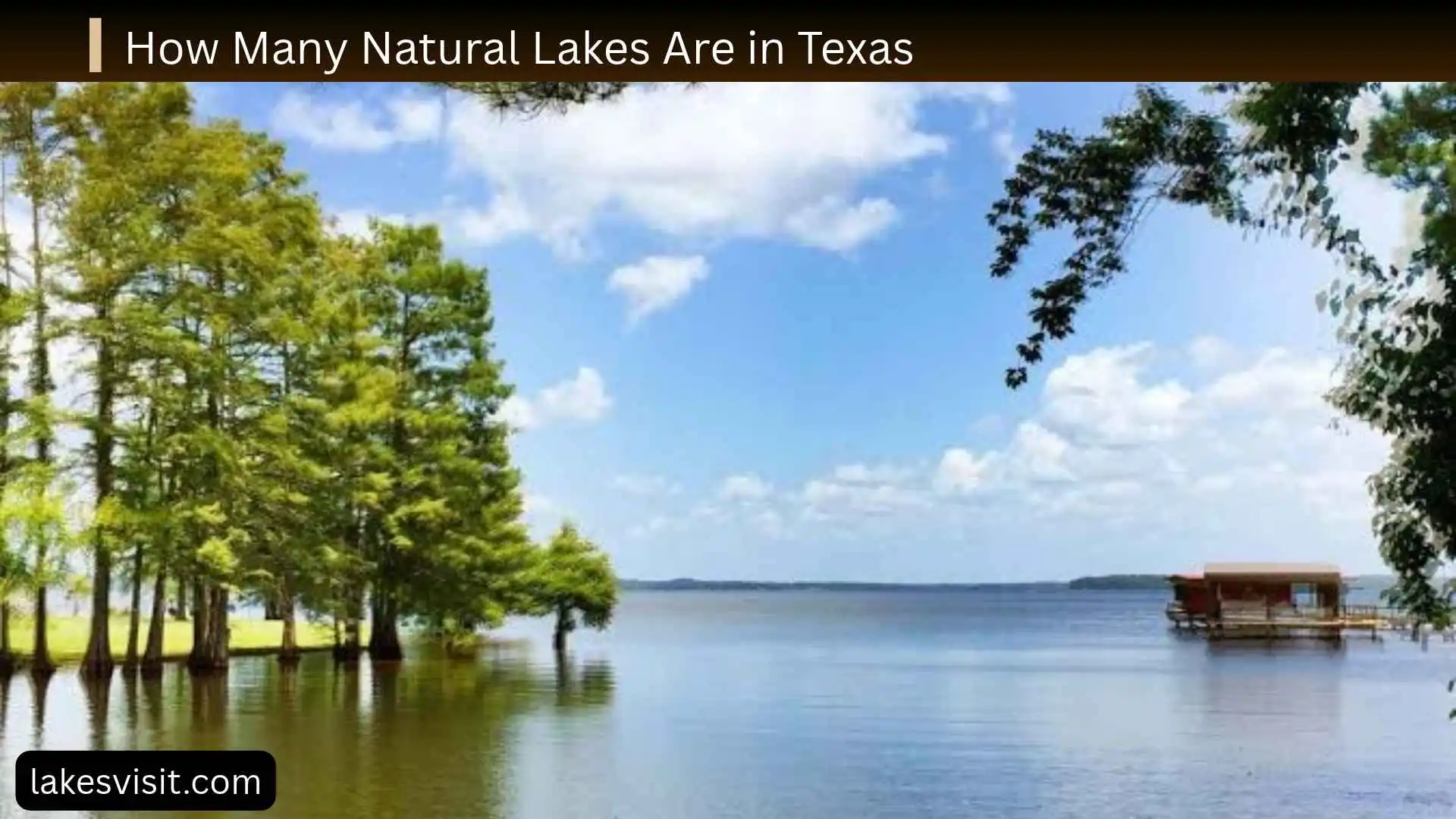
Have you ever wondered how many natural lakes are in Texas? I am always fascinated by the hidden natural wonders of Texas, and its lakes are no exception. You might think that a state with thousands of lakes would have plenty of naturally formed ones, but the reality is surprisingly different. Most lakes in Texas are actually man-made reservoirs, while naturally formed lakes are much less common.
I am excited to help you explore this interesting side of Texas and uncover what makes its natural lakes so unique. Whether you are a nature lover, a traveler, or simply curious about Texas geography, you’ll discover how many natural lakes exist in the state, why they are relatively rare, and how they differ from artificial lakes. By the end of this guide, you’ll have a clearer understanding of Texas’s natural lakes and their fascinating geographical features.
How Many Natural Lakes Are in Texas?
For the standard geographic answer, Texas has one recognized large natural lake: Caddo Lake.
This is the answer given by the Texas Parks and Wildlife Department in its aquatic science materials. The agency explains that Texas actually has only one natural lake and identifies Caddo Lake as the state’s only naturally formed large lake.
That does not mean Texas has only one naturally occurring body of standing water. The state has many natural aquatic features, but they may be classified differently from a traditional large lake.
This distinction is important because it explains why you may occasionally see information about other natural lakes or lake-like features in Texas.
The Simple Answer
Number of recognized large natural lakes in Texas: 1
Name: Caddo Lake
Location: Texas-Louisiana border
How it formed: Naturally, through a massive logjam associated with the Red River system
Present condition: Later modified and controlled in part by human-built infrastructure
Why Does Texas Have So Few Natural Lakes?
Texas is enormous, but its landscape does not naturally produce large numbers of permanent lakes in the way some northern states do.
One major reason is that many Texas waterways are connected to rivers and streams rather than being enclosed in naturally formed basins that can retain water for long periods.
Texas also has highly variable rainfall. The Texas Water Development Board notes that annual precipitation varies substantially across the state, from less than 10 inches in parts of western Texas to more than 55 inches in eastern areas. Evaporation, geology, vegetation, soil, topography, and runoff also influence the state’s water systems.
Instead of relying primarily on naturally formed lake basins, Texas has historically built reservoirs to capture and store water.
These reservoirs serve important purposes including:
- Municipal and drinking-water supplies
- Flood control
- Agriculture
- Industrial uses
- Hydroelectric power
- Recreation
- Drought management
Texas’s reservoir system is therefore a major reason the state has so many bodies of water that people commonly call “lakes.”
Caddo Lake: Texas’s Only Recognized Large Natural Lake
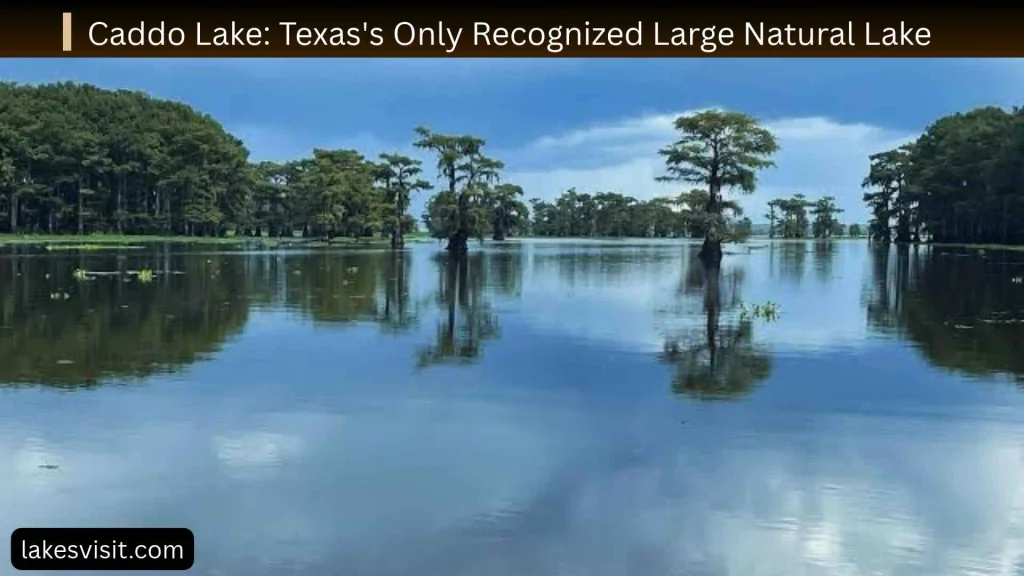
Caddo Lake is the centerpiece of the answer to how many natural lakes are in Texas.
Located on the Texas-Louisiana state line, the lake occupies portions of Harrison and Marion counties in Texas and extends into Caddo Parish, Louisiana. It lies northeast of Marshall, Texas, along Big Cypress Bayou.
Unlike most of Texas’s major lakes, Caddo Lake did not begin as a reservoir created behind a modern dam.
Its original formation was a natural process involving a huge accumulation of fallen trees and other debris known as the Great Raft.
Where Is Caddo Lake?
Caddo Lake is approximately 29 miles northeast of Marshall, near the Texas-Louisiana border. It is shared geographically by Texas and Louisiana.
On the Texas side, the lake is associated with Harrison and Marion counties. The surrounding landscape is particularly distinctive because of its extensive wetlands and bald cypress trees.
This location also makes Caddo Lake different from many of the large reservoirs associated with major Texas cities.
How Did Caddo Lake Form?
The origin of Caddo Lake is connected to a massive natural logjam called the Great Raft.
According to the Caddo Lake State Park interpretive guide from Texas Parks and Wildlife, the Great Raft was an enormous accumulation of logs and branches along the Red River. The dense mass acted like a natural dam, restricting water flow and contributing to the development of the lake.
There has historically been a popular story connecting the lake’s formation to the 1811 New Madrid earthquake. However, Texas Parks and Wildlife’s wetland research explains that this earthquake story is not the accepted explanation for the lake’s original formation. Evidence indicates the Great Raft was the key natural feature, and the lake existed before 1811.
Is Caddo Lake Completely Natural Today?
Not exactly.
Caddo Lake began as a naturally formed lake, but people later changed its water system.
The Great Raft was eventually removed, and a dam was constructed in 1914. Texas Parks and Wildlife notes that dams and reservoirs now keep the lake’s waters under human control.
This creates an important distinction:
Caddo Lake is naturally formed, but its modern water levels and hydrology have been influenced by human infrastructure.
That does not erase its natural origin. It simply means that the lake people see today is not completely untouched by human activity.
How Large and Deep Is Caddo Lake?
Caddo Lake has a surface area of approximately 26,800 acres and a maximum depth of about 20 feet, according to Texas Parks and Wildlife.
Its relatively shallow character and extensive vegetation contribute to the unusual appearance of the lake.
Instead of looking like a typical open-water reservoir, parts of Caddo Lake resemble a vast wetland filled with cypress trees, aquatic vegetation, channels, and shallow water.
Are There Other Natural Lakes or Water Bodies in Texas?
Yes—but this is where terminology matters.
Although Caddo Lake is commonly identified as Texas’s only natural or naturally formed large lake, the state has other naturally formed aquatic features.
These include oxbow lakes, resacas, playa basins, wetlands, and other natural depressions or abandoned river channels.
Therefore, saying “Texas has only one natural lake” is useful as a standard geographic answer, but it should not be interpreted to mean that every naturally formed water body in the state is artificial.
Oxbow Lakes
Oxbow lakes form when a river changes course and leaves an isolated section of its former channel behind.
Texas has river systems capable of creating these naturally occurring features, particularly across floodplains.
An oxbow may look like a small lake, but its origin is different from that of a large, permanent lake basin.
Over time, an oxbow can gradually fill with sediment and vegetation, become shallower, or turn into a wetland.
Resacas
Resacas are another type of natural water feature found particularly in South Texas.
They are former channels or isolated portions of the Rio Grande system that became separated from the active river channel.
Some resacas contain water for significant periods, while others have experienced substantial changes from human development, water management, and drought.
Because of their river-channel origins, they are not normally used to challenge the standard answer that Caddo Lake is Texas’s only naturally formed large lake.
Playa Lakes
The Texas Panhandle and High Plains contain thousands of shallow depressions commonly known as playa basins or playa lakes.
These features collect rainfall and runoff and can provide important habitat for wildlife.
Many are temporary or seasonal rather than permanent deep lakes.
That makes them another reason why the phrase “one natural lake” should be understood in context rather than interpreted as a claim that Texas has only one naturally occurring depression containing water.
Green Lake
Green Lake is another example that demonstrates why definitions can become complicated when discussing natural lakes in Texas.
Naturally formed water bodies exist beyond Caddo Lake, but Texas agencies commonly distinguish Caddo as the state’s only large naturally formed lake.
For an article answering the question “How many natural lakes are in Texas?”, the clearest approach is therefore to provide the standard answer first and then explain these additional natural water features.
Natural Lakes vs. Texas Reservoirs
One of the easiest ways to understand Texas’s unusual lake situation is to compare a natural lake with a reservoir.
| Natural Lake | Reservoir |
| Forms through natural geological or physical processes | Usually created by human construction |
| Does not originally require a dam to exist | Commonly formed by damming a river or stream |
| Caddo Lake is the key Texas example | Lake Travis, Lake Lewisville, and many others are reservoirs |
| Natural processes determine its original formation | Water storage and management are major purposes |
| May later be modified by people | Created specifically through human infrastructure |
Texas Parks and Wildlife explains that almost all of the state’s lakes and ponds were built by placing dams across streams or rivers.
That is why a map of Texas can appear to contain hundreds of lakes while the state is still described as having only one naturally formed large lake.
How Many Reservoirs Are in Texas?
The exact number depends on how reservoirs are defined.
The Texas Water Development Board currently identifies 196 major reservoirs. It defines a major reservoir as an impoundment with at least 5,000 acre-feet of storage capacity at its normal operating level.
Texas Parks and Wildlife uses a broader description and states that Texas has more than 200 major reservoirs and more than 5,000 smaller ones.
These figures are not necessarily contradictory. Different agencies and datasets can use different classifications and counting methods.
The important point is that Texas has a huge number of human-created water bodies compared with its number of naturally formed large lakes.
Why Did Texas Build So Many Reservoirs?
Reservoir construction became an important part of Texas water management because rivers alone cannot reliably provide water throughout periods of drought, flooding, and changing demand.
Reservoirs allow water to be captured during wetter periods and stored for later use.
The Texas Water Development Board says reservoirs are especially important because they can capture floodwaters for use during times when rivers are low or dry.
They have supported:
- Public water supplies
- Agricultural irrigation
- Flood management
- Industrial development
- Electricity generation
- Recreation
- Long-term water planning
This human-built network explains why the word “lake” is so common across Texas even though relatively few large lakes formed naturally.
Famous Texas Lakes That Are Actually Reservoirs
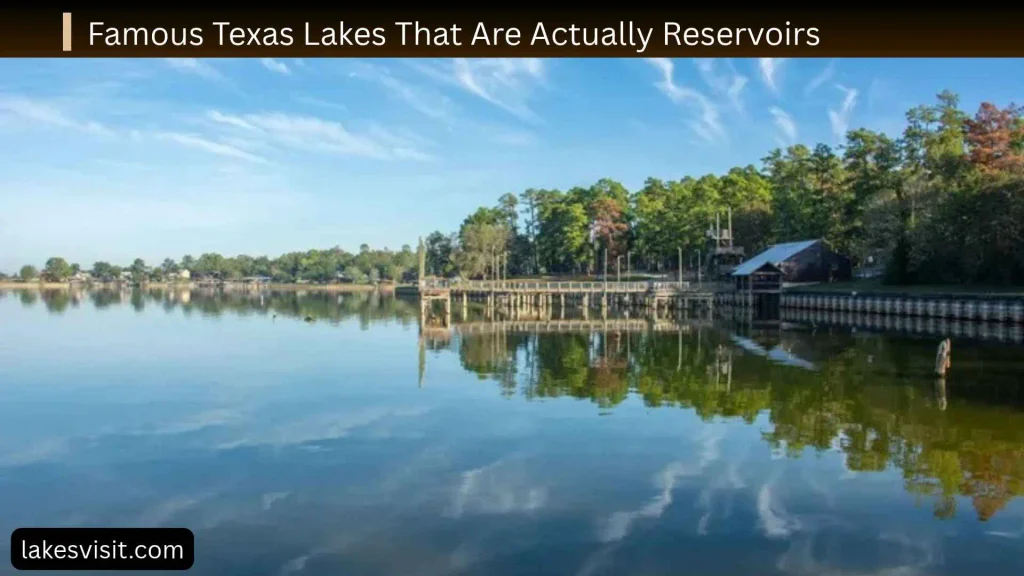
Many famous Texas lakes are not natural lakes in the geological sense.
Lake Travis
Lake Travis is a reservoir in Central Texas rather than a naturally formed lake. Texas Parks and Wildlife specifically uses Lake Travis as an example of a large Texas lake created by a dam.
Lake Lewisville
Lake Lewisville is another major Texas reservoir. Like many Texas lakes, its present form comes from human water-management infrastructure rather than the natural formation of a large enclosed lake basin.
Lake Texoma
Lake Texoma is a major reservoir on the Red River. The reservoir was created by Denison Dam, with construction beginning in 1939 and the project entering operation for flood control in 1944.
Sam Rayburn Reservoir
Sam Rayburn Reservoir is another major artificial water body. Its dam and reservoir project were developed for water-resource and flood-control purposes, and the reservoir is now an important recreational and fisheries destination.
Toledo Bend Reservoir
Toledo Bend is another enormous man-made reservoir shared by Texas and Louisiana. It was created by the Toledo Bend Dam on the Sabine River, with deliberate impoundment beginning in 1966.
These examples show why the term “Texas lake” does not automatically mean “natural lake.”
Why the Number of Natural Lakes Can Be Confusing
The confusion usually comes from the word natural.
If someone asks for the number of large, recognized natural lakes in Texas, the answer is straightforward:
One — Caddo Lake.
But if the question is expanded to include every naturally formed water feature that might be described as a lake, the answer becomes much less simple.
Texas contains:
- Natural oxbow lakes
- Resacas
- Playa basins
- Wetlands
- Small natural depressions
- Other naturally occurring aquatic habitats
This is why it is better to distinguish between recognized large natural lakes and all naturally formed water features.
The Texas Parks and Wildlife Department itself uses the “only naturally formed large lake” description for Caddo Lake, which is the most useful formulation for understanding the standard answer.
Why Caddo Lake Is Important
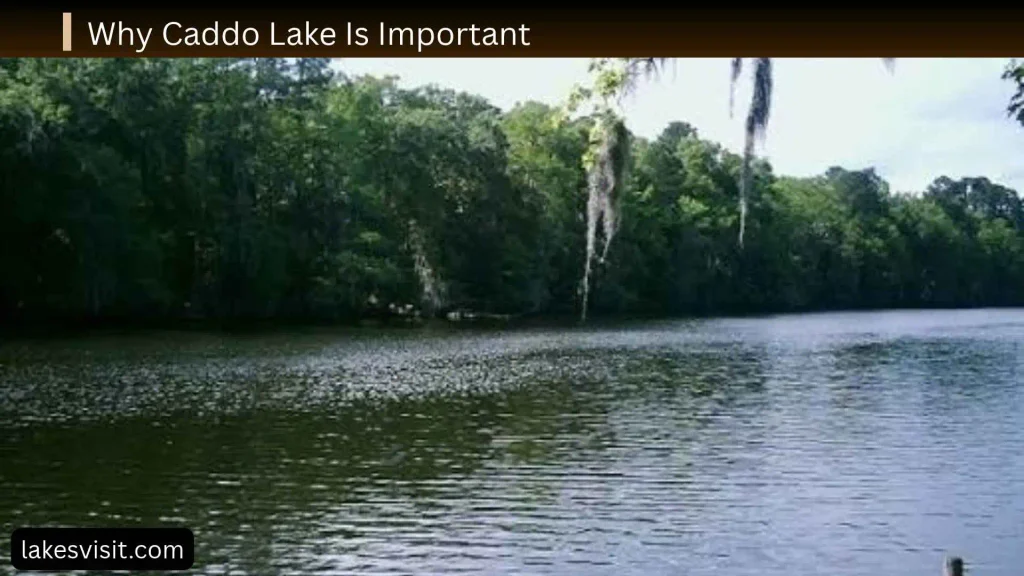
Caddo Lake is significant for much more than its status as Texas’s famous natural lake.
It is an extensive wetland ecosystem with distinctive bald cypress forests, aquatic vegetation, fish, birds, and other wildlife.
The lake’s wetlands have received international protection because of their ecological importance. Texas Parks and Wildlife also identifies invasive giant salvinia as an important threat to the lake’s aquatic ecosystem.
This combination of natural history and ecological value makes Caddo Lake one of the most distinctive aquatic environments in Texas.
Visiting Caddo Lake
For travelers interested in seeing Texas’s best-known natural lake, Caddo Lake offers a very different experience from a typical reservoir.
Visitors can enjoy activities such as:
- Fishing
- Paddling
- Wildlife watching
- Birdwatching
- Photography
- Exploring the surrounding wetlands
Texas Parks and Wildlife identifies Caddo Lake as a recreational fishery and provides information about species including bass, catfish, crappie, white bass, and sunfish.
The lake’s shallow water, submerged vegetation, and bald cypress trees give it a character that is difficult to find elsewhere in Texas.
Frequently Asked Questions
How many natural lakes are in Texas?
Texas is commonly recognized as having one naturally formed large lake: Caddo Lake. Other naturally occurring water features exist, but they are generally classified differently from the state’s recognized large natural lake.
What is the only natural lake in Texas?
Caddo Lake is the lake traditionally identified as Texas’s only natural lake and the state’s only naturally formed large lake.
Is Caddo Lake natural or man-made?
Caddo Lake is naturally formed, but humans later modified it. Its original formation is associated with the Great Raft, a massive natural logjam, while a dam built in 1914 later altered and controlled its water levels.
Is Caddo Lake completely in Texas?
No. Caddo Lake crosses the Texas-Louisiana border. Its Texas portion is in Harrison and Marion counties, while the lake also extends into Louisiana.
How did Caddo Lake form?
The lake developed through a natural process involving the Great Raft, a massive logjam on the Red River system. The accumulation restricted water flow and helped create the lake.
Was Caddo Lake created by an earthquake?
The earthquake explanation is a popular historical story, but Texas Parks and Wildlife research identifies the Great Raft as the principal explanation for the lake’s original formation. Evidence indicates Caddo Lake existed before the 1811 New Madrid earthquake.
Are most lakes in Texas man-made?
Yes. Texas Parks and Wildlife states that almost all of the state’s lakes and ponds were created by placing dams across rivers or streams.
How many reservoirs are in Texas?
The Texas Water Development Board currently identifies 196 major reservoirs, using its definition of a major reservoir as one with at least 5,000 acre-feet of storage capacity at normal operating level.
Is Lake Travis a natural lake?
No. Lake Travis is a reservoir created through dam construction. Texas Parks and Wildlife uses it as an example of a large Texas lake formed by damming a river.
Is Lake Conroe natural?
No. Lake Conroe is a man-made reservoir rather than a naturally formed lake.
Are there other naturally formed water bodies in Texas?
Yes. Texas has natural oxbow lakes, resacas, playa basins, wetlands, and other naturally occurring aquatic features. These are different from the standard classification of Caddo Lake as the state’s only naturally formed large lake.
Can you visit Caddo Lake?
Yes. Caddo Lake is a recreational destination where visitors can fish, paddle, observe wildlife, and explore its distinctive wetland environment. Texas Parks and Wildlife provides public-access and fishing information for the lake.
Final Thoughts
So, how many natural lakes are in Texas?
The standard answer is one: Caddo Lake.
But the full story is more nuanced. Texas has many naturally occurring aquatic features, including oxbow lakes, resacas, playa basins, and wetlands. These should not be confused with the state’s large reservoir system.
Caddo Lake stands apart because it is the state’s recognized large naturally formed lake. It developed through natural processes associated with the Great Raft, yet its modern water system has also been influenced by human infrastructure.
That unusual combination makes Caddo Lake important both geographically and ecologically. Meanwhile, the hundreds of reservoirs spread across Texas demonstrate how heavily the state has relied on human-built water storage to meet its water, agricultural, flood-control, and recreational needs.