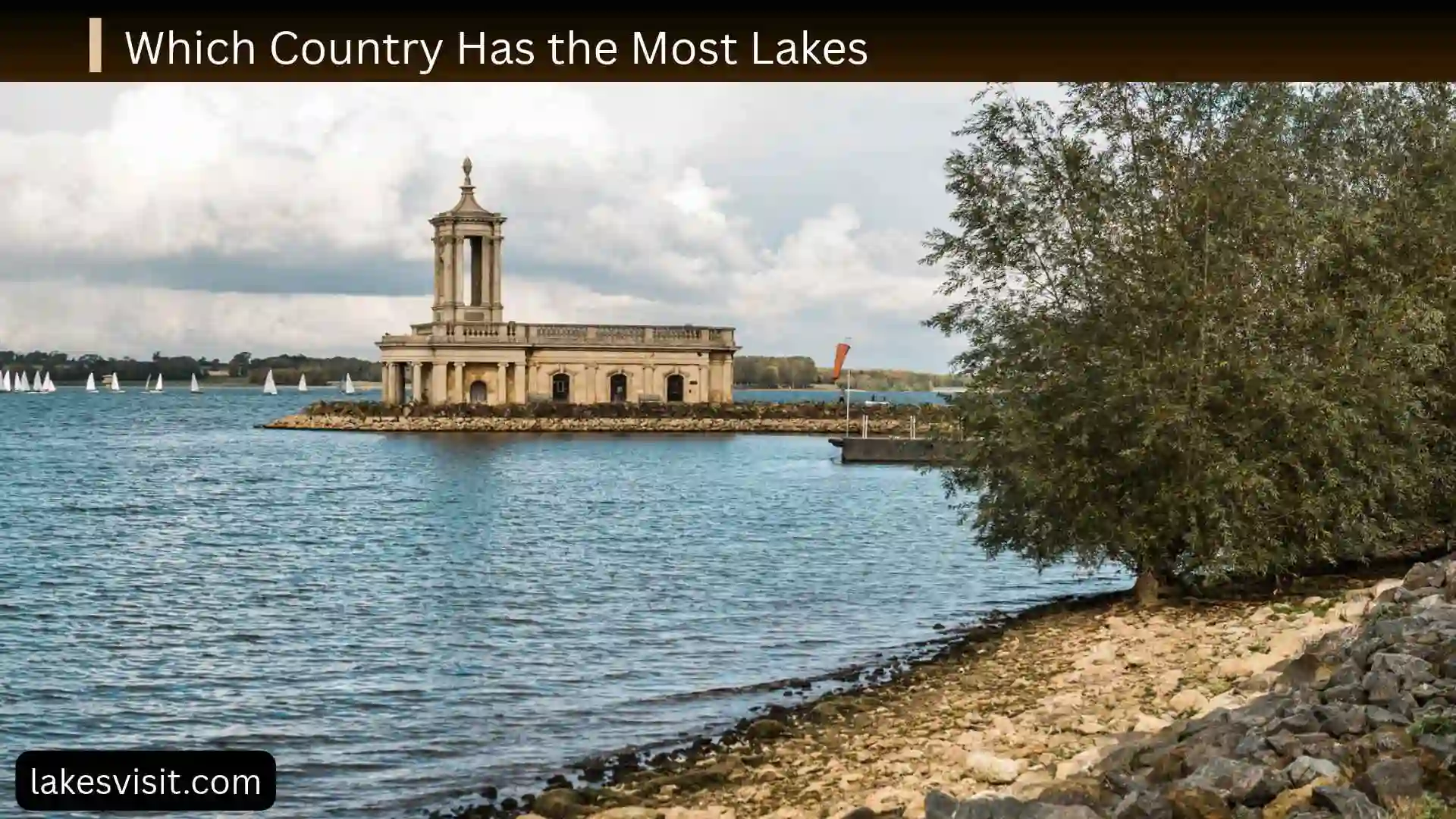
Canada has the most lakes in the world when countries are compared using a widely cited global inventory of natural lakes measuring at least 0.1 square kilometers (10 hectares). That inventory counts approximately 879,800 lakes in Canada, putting the country far ahead of Russia and the United States.
However, there is an important detail behind that number: there is no single worldwide definition of exactly what qualifies as a lake or how small a lake can be before it is excluded from a count. If smaller water bodies are included, the numbers can change substantially. For example, Finland officially reports around 168,000 lakes measuring at least 500 square meters, while the global comparison that puts Canada first uses a much larger minimum area of 0.1 km².
That difference explains why you may see Finland mentioned in discussions about countries with the most lakes even though Canada ranks first in the major global ≥0.1 km² comparison.
This guide explains which country has the most lakes, how many lakes Canada has, why Canada has so many, how Finland compares, and why lake rankings can vary between sources.
Which Country Has the Most Lakes?
Canada is the country with the most lakes in the commonly cited global comparison of natural lakes measuring at least 0.1 km².
The underlying HydroLAKES research produced a global inventory of about 1.42 million natural lake polygons at or above 10 hectares. The study found that lake-rich regions are especially concentrated across northern Canada, Scandinavia, Alaska, and parts of Russia.
A country-by-country ranking based on this comparison places Canada well ahead of every other country.
| Rank | Country | Approx. number of lakes ≥0.1 km² |
| 1 | Canada | 879,800 |
| 2 | Russia | 201,200 |
| 3 | United States | 102,500 |
| 4 | China | 23,800 |
| 5 | Sweden | 22,600 |
| 6 | Brazil | 20,900 |
| 7 | Norway | 20,000 |
| 8 | Argentina | 13,600 |
| 9 | Kazakhstan | 12,400 |
| 10 | Australia | 11,400 |
These figures come from the widely cited global comparison based on lakes of at least 0.1 km².
How Many Lakes Does Canada Have?
Using the ≥0.1 km² threshold, Canada has approximately 879,800 lakes.
It is important not to treat 879,800 as a universal census of every lake and pond in Canada. It is a figure produced under a specific methodology and minimum-size threshold. Broader estimates that include much smaller lakes can reach more than 2 million lakes.
This is why both of the following statements can be found:
- Canada has about 879,800 lakes under the ≥0.1 km² global comparison.
- Canada has more than 2 million lakes when smaller lakes are included.
They are not necessarily contradictory. They are based on different counting rules.
Why Does the Number of Lakes Vary?
Lake counts vary because researchers have to establish rules before they can count water bodies consistently.
One of the most important rules is the minimum surface area.
The HydroLAKES research used a threshold of 10 hectares, equivalent to 0.1 km². Its database contains natural lakes at or above that threshold and was designed to provide a consistent global comparison.
Smaller lakes are far more numerous than large ones. The researchers estimated that reducing the threshold from 10 hectares to 1 hectare would increase the estimated global number of natural lakes from about 1.42 million to 21.2 million.
That shows why seemingly simple questions such as “Which country has the most lakes?” can produce different answers depending on the dataset.
Top Countries With the Most Lakes
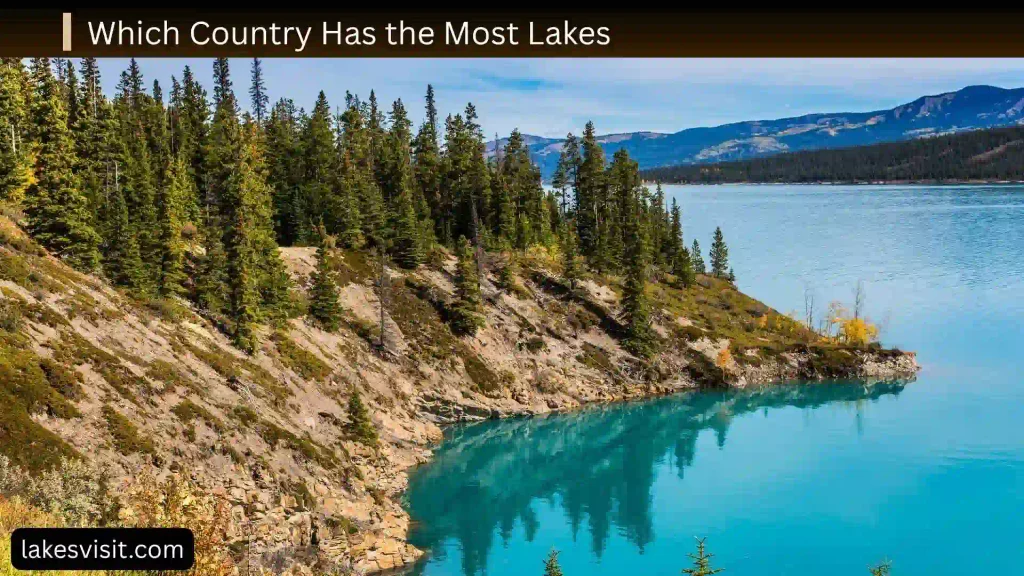
Canada is the clear leader in the ≥0.1 km² comparison, but several other countries also contain enormous numbers of lakes.
Canada
Canada ranks first with approximately 879,800 lakes in the commonly cited ≥0.1 km² comparison.
Its enormous lake count is closely connected to Canada’s geography and glacial history. Large portions of the country were shaped by continental ice sheets that repeatedly advanced and retreated during past ice ages.
Those glaciers scraped, fractured, and reshaped the landscape, leaving countless depressions where water could collect.
Canada’s exceptional lake abundance is also reflected in its total lake area. The Government of Canada states that Canada has more lake area than any other country in the world and has 563 lakes larger than 100 km².
Russia
Russia ranks second in the commonly cited comparison, with approximately 201,200 lakes measuring at least 0.1 km².
Russia’s enormous land area stretches across a wide range of landscapes, including forests, tundra, mountains, and lowlands. Northern and western regions contain particularly large concentrations of lakes.
Russia is also home to Lake Baikal, one of the world’s most remarkable freshwater lakes. However, the existence of famous individual lakes such as Baikal is separate from the country’s overall lake count.
United States
The United States ranks third in the same ≥0.1 km² comparison, with approximately 102,500 lakes.
The U.S. total can vary between sources because different inventories may use different definitions and may handle reservoirs, small water bodies, and other types of inland water differently.
Alaska is especially important to the country’s overall lake abundance. Its vast northern landscape contains an enormous number of lakes and ponds.
China, Sweden, Brazil and Norway
China, Sweden, Brazil, and Norway also rank among the countries with the largest numbers of lakes in the ≥0.1 km² comparison.
China has approximately 23,800, Sweden about 22,600, Brazil about 20,900, and Norway about 20,000 under the cited ranking.
Their lake landscapes are shaped by different combinations of geography and climate. Sweden and Norway, like Canada, have strong connections between lake abundance and glacial landscapes. Brazil’s lake systems are influenced by rivers, floodplains, wetlands, and regional geology, while China’s lakes occur across a highly varied landscape.
Why Does Canada Have So Many Lakes?
Canada’s huge lake count is not the result of one single factor. It comes from the combination of glacial history, geology, climate, drainage, and the country’s enormous land area.
Glacial History
Glaciation is one of the most important reasons Canada has so many lakes.
During repeated periods of continental glaciation, massive ice sheets moved across large parts of what is now Canada. Moving ice could erode bedrock, deepen existing depressions, scrape away sediments, and reshape valleys.
When the glaciers retreated, many of these depressions filled with meltwater and precipitation, forming lakes.
The global HydroLAKES study found that areas with particularly high lake densities are strongly associated with the extent of the last glacial maximum in northern Canada and Scandinavia, along with parts of Alaska and Russia.
This pattern helps explain why Canada is such an extreme outlier in global lake numbers.
The Canadian Shield
The Canadian Shield is another important part of the explanation.
This enormous geological region contains ancient bedrock and covers a substantial portion of Canada. Glacial erosion repeatedly altered its surface, leaving an irregular landscape containing countless depressions and drainage basins.
When combined with Canada’s climate and abundant water, this landscape provides ideal conditions for the formation and persistence of many lakes.
The result is a landscape where lakes can occur almost continuously across large areas rather than being limited to a few isolated basins.
Canada’s Huge Land Area
Canada is the world’s second-largest country by total area, giving glacial and geological processes an enormous region over which to operate.
Even if another country had similar geological conditions in some regions, it would be difficult to match Canada’s combination of:
- Huge land area
- Extensive glacial landscapes
- Ancient bedrock
- Large northern watersheds
- Abundant precipitation and snow
- Numerous natural depressions
- Large areas of relatively undeveloped terrain
HydroLAKES research found that northern Canada contains some of the world’s highest concentrations of lakes.
Canada vs. Finland: Which Has More Lakes?
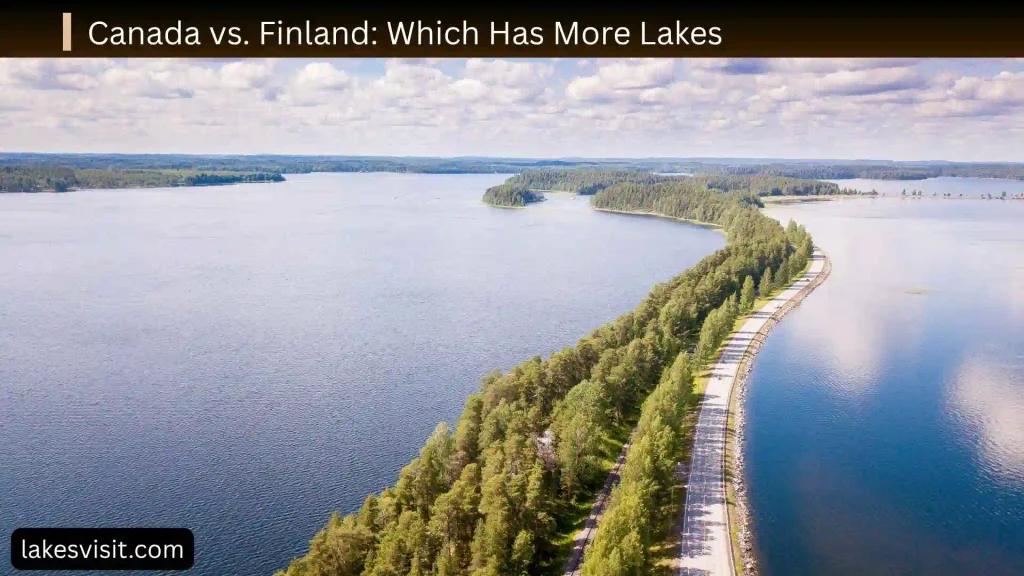
Canada ranks first in the commonly cited global comparison, but Finland is one of the countries most frequently associated with having an enormous number of lakes.
The apparent contradiction comes down primarily to lake size thresholds.
Why Finland Is Called the Land of a Thousand Lakes
Finland is famously known as the “Land of a Thousand Lakes.”
In reality, Finland has vastly more than 1,000 lakes. Statistics Finland reports approximately 168,000 lakes with an area of at least 500 m², including around 57,000 lakes larger than one hectare.
Finland’s lake-rich landscape is another product of glacial processes. Much of the country was shaped by ice, leaving an intricate landscape of forests, rocky terrain, wetlands, and water bodies.
Its largest lake is Saimaa, which Statistics Finland lists at about 1,393 km².
Why Different Lake Counts Produce Different Rankings
The key difference is the minimum size being counted.
Finland’s official figure of about 168,000 includes lakes as small as 500 m². The major global comparison used to rank Canada, Russia, and the United States counts natural lakes of at least 100,000 m², or 0.1 km².
That means the two figures are measuring different groups of water bodies.
So, if the question is:
“Which country has the most lakes in the major global ≥0.1 km² comparison?”
The answer is Canada.
If the question is:
“Which country has an enormous number of small lakes relative to its size?”
Finland is an obvious example and deserves its famous reputation.
Does Canada Have More Lakes Than Russia and the United States?
Yes. Under the commonly cited ≥0.1 km² comparison, Canada has substantially more lakes than both Russia and the United States.
Canada vs. Russia
Canada’s approximately 879,800 lakes in this dataset greatly exceed Russia’s approximately 201,200.
That means Canada’s count is more than four times Russia’s under this particular methodology.
Russia remains an extremely lake-rich country, however, and its enormous territory contains many different lake environments, from northern tundra and forests to mountain regions.
Canada vs. United States
Canada also has far more lakes than the United States under the same comparison.
The figures are approximately:
- Canada: 879,800
- United States: 102,500
Again, these figures should be understood as a standardized comparison rather than a complete census of every pond, reservoir, and small water body in either country.
The difference is especially notable because Canada and the United States share the Great Lakes, one of the world’s largest freshwater systems.
Does Canada Have the Most Lake Area Too?
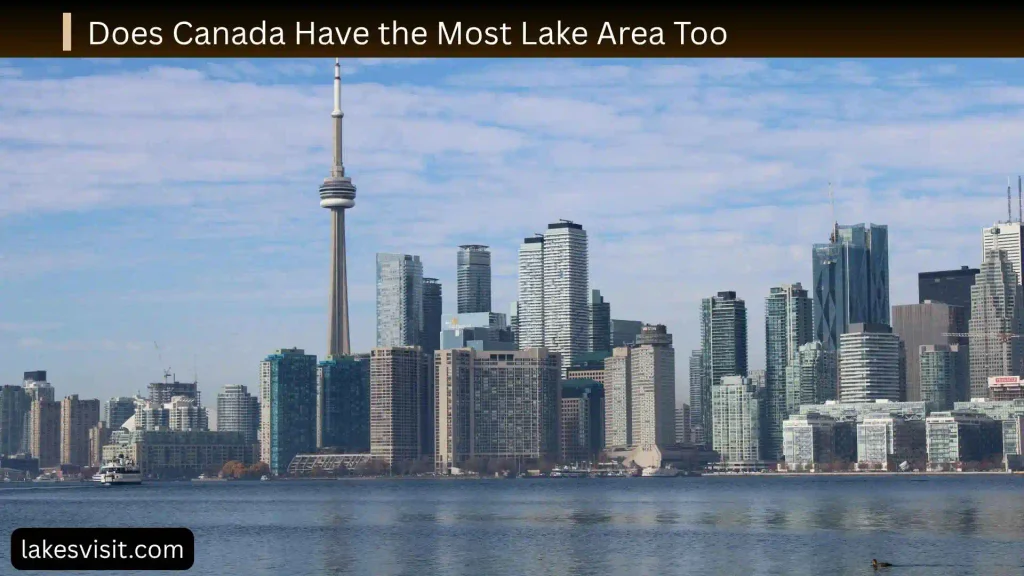
Yes. Canada is not only the leader in the number of lakes under the commonly cited global comparison; it also has the largest total lake area of any country, according to the Government of Canada.
Canada has 563 lakes larger than 100 km², demonstrating that its lake abundance is not simply the result of having countless tiny water bodies. It also contains many exceptionally large lakes.
Canada’s Largest Lakes
Some of Canada’s best-known large lakes include:
- Great Bear Lake
- Great Slave Lake
- Lake Winnipeg
- Lake Athabasca
- Lake Superior
- Lake Huron
- Lake Erie
- Lake Ontario
Several of the Great Lakes lie along the Canada–United States border, so they are shared international waters rather than lakes located entirely within Canada.
The Great Lakes
The Great Lakes are among the most important freshwater systems on Earth.
The Canada Water Agency states that the Great Lakes contain approximately 18% of the world’s surface freshwater. They support drinking-water supplies, transportation, industry, recreation, ecosystems, and communities across Canada and the United States.
This is another reason Canada’s relationship with lakes extends far beyond the number of individual water bodies.
How Are Lakes Counted?
There is no single worldwide system that produces one permanent number for every lake on Earth.
Researchers need to decide what counts as a lake and what size threshold should be used.
Minimum Lake Size
Minimum surface area is one of the biggest factors.
The HydroLAKES research focused on natural lakes with a surface area of at least 10 hectares, equal to 0.1 km² or 100,000 m².
Once researchers include smaller water bodies, the total number increases dramatically.
The same study estimated about 21.2 million natural lakes at least 1 hectare in size, compared with about 1.42 million natural lakes at or above 10 hectares.
This demonstrates why two credible sources can publish different lake counts without either necessarily being wrong.
Natural Lakes vs. Reservoirs
Another important issue is whether a database counts only natural lakes or also includes human-made reservoirs.
The HydroLAKES project contains lake polygons and also incorporates large reservoirs and regulated lakes, while its global natural-lake statistics distinguish natural lakes from human-made reservoirs.
For country comparisons, it is therefore important to check whether a source is counting:
- Natural lakes
- Reservoirs
- Ponds
- Wetlands
- Intermittent water bodies
- Lakes below a particular size threshold
Without knowing those rules, simply comparing two headline numbers can be misleading.
Frequently Asked Questions
Which country has the most lakes in the world?
Canada has the most lakes in the commonly cited global comparison of natural lakes measuring at least 0.1 km², with approximately 879,800 lakes.
How many lakes does Canada have?
Canada has approximately 879,800 lakes measuring at least 0.1 km² in the widely cited global comparison. Broader estimates that include much smaller lakes can exceed 2 million.
Does Canada have more lakes than Finland?
Under the ≥0.1 km² global comparison, Canada ranks first. Finland’s official statistics count about 168,000 lakes at least 500 m², so the two figures use different size thresholds.
Does Canada have more lakes than Russia?
Yes. The commonly cited ≥0.1 km² comparison lists about 879,800 lakes for Canada and about 201,200 for Russia.
Does Canada have more lakes than the United States?
Yes. Under the same comparison, Canada has approximately 879,800 lakes compared with about 102,500 in the United States.
Which country has the second-most lakes?
Russia ranks second in the commonly cited global comparison, with approximately 201,200 lakes measuring at least 0.1 km².
Which country has the third-most lakes?
The United States ranks third in the same comparison, with approximately 102,500 lakes measuring at least 0.1 km².
Why does Canada have so many lakes?
Canada has so many lakes largely because of its enormous land area and extensive glacial history. Ice sheets reshaped large parts of the country, creating countless depressions that later filled with water. Northern Canada is one of the world’s major high-density lake regions.
Why is Finland called the Land of a Thousand Lakes?
Finland is called the “Land of a Thousand Lakes” because its landscape contains an exceptionally large number of lakes. Statistics Finland reports around 168,000 lakes measuring at least 500 m².
Does Canada have the most freshwater lakes?
Canada is widely recognized as the world’s leading country for lake abundance and also has more lake area than any other country. Exact freshwater-lake rankings can vary depending on the definition and dataset used.
Which country has the most lake area?
Canada has more lake area than any other country, according to the Government of Canada. It has 563 lakes larger than 100 km².
Are all lakes counted in the same way?
No. Lake counts vary depending on minimum size, whether artificial reservoirs are included, and how researchers define and map individual water bodies. This is why Canada can be reported as having approximately 879,800 lakes in one dataset and more than 2 million in broader estimates.
Conclusion
So, which country has the most lakes?
Canada is the answer under the widely cited global comparison of natural lakes measuring at least 0.1 km², with approximately 879,800 lakes. Russia ranks second at about 201,200, while the United States ranks third at about 102,500.
The important qualification is that there is no universal lake-counting rule. Smaller lakes can be excluded from global inventories, and countries may use different definitions when publishing their own statistics. Finland is a perfect example: its official count includes lakes as small as 500 m², producing a much larger number than a ≥0.1 km² international comparison.
Canada’s extraordinary lake abundance is largely connected to its vast territory and glacially shaped landscape. The country also leads the world in total lake area and contains some of Earth’s most important freshwater systems, including the Great Lakes.
In short, Canada has the most lakes in the world—but the exact number depends on how a lake is defined and counted.