
Switzerland is famous for its Alps, but its lakes are just as important to the country’s landscape and travel experience. From the turquoise waters of Lake Brienz to the dramatic mountain setting of Lake Lucerne and the vineyard-covered shores of Lake Geneva, Switzerland offers an extraordinary variety of lake destinations.
There are around 1,500 lakes in Switzerland, ranging from large international lakes to small alpine lakes surrounded by forests, glaciers and high mountain peaks. Lakes and rivers cover around 4% of the country’s surface area.
So, which Switzerland lakes are actually worth visiting?
For a first trip, Lake Lucerne, Lake Brienz, Lake Geneva and Lake Thun are among the strongest choices because they combine beautiful scenery with boat trips, towns, hiking and easy access to other attractions. For a classic alpine-lake experience, Lake Oeschinen and Lake Sils are excellent choices, while Lake Lugano and Lake Maggiore offer a warmer, Mediterranean atmosphere.
This guide covers the best lakes in Switzerland, what makes each one different, which lakes are best for specific types of travelers, how to reach them, the best time to visit, and sample lake-focused itineraries.
Best Switzerland Lakes at a Glance
Quick Comparison of the Best Lakes
| Lake | Best For | What Makes It Special | Recommended Time |
| Lake Lucerne | First-time visitors | Mountains, boats and Lucerne | 1–2 days |
| Lake Brienz | Turquoise water & mountain scenery | Striking color and alpine landscape | 1 day |
| Lake Geneva | Cities, culture & vineyards | Lavaux, Montreux, Lausanne and Geneva | 1–2 days |
| Lake Thun | Castles & sightseeing | Castles, mountains and lake cruises | 1 day |
| Lake Zurich | City breaks & swimming | Zurich waterfront, boats and lidos | Half to 1 day |
| Lake Lugano | Couples & Mediterranean scenery | Palm trees, mountains and Italian influence | 1–2 days |
| Lake Constance | Families & cycling | Large lake with towns and recreation | 1–2 days |
| Lake Neuchâtel | Relaxed lake holidays | Beaches, vineyards and historic towns | 1 day |
| Lake Walen | Dramatic scenery | Steep Churfirsten mountains | Half to 1 day |
| Lake Maggiore | Warm-weather atmosphere | Mediterranean vegetation and Italian setting | 1–2 days |
| Lake Biel/Bienne | Wine & cycling | Vineyards and bilingual culture | 1 day |
| Lake Murten | Families & easy activities | Beaches and medieval Murten | Half to 1 day |
| Lake Oeschinen | Alpine adventure | Turquoise water and high mountains | 1 day |
| Lake Sils | Peace & hiking | High-altitude Engadine landscape | 1 day |
| Blausee | Photography | Small, intensely scenic mountain lake | Half day |
The best lake depends on the kind of trip you want. A traveler looking for mountains and boat rides will have a different ideal destination from someone looking for swimming, city sightseeing or a quiet hiking escape.
15 Best Lakes in Switzerland
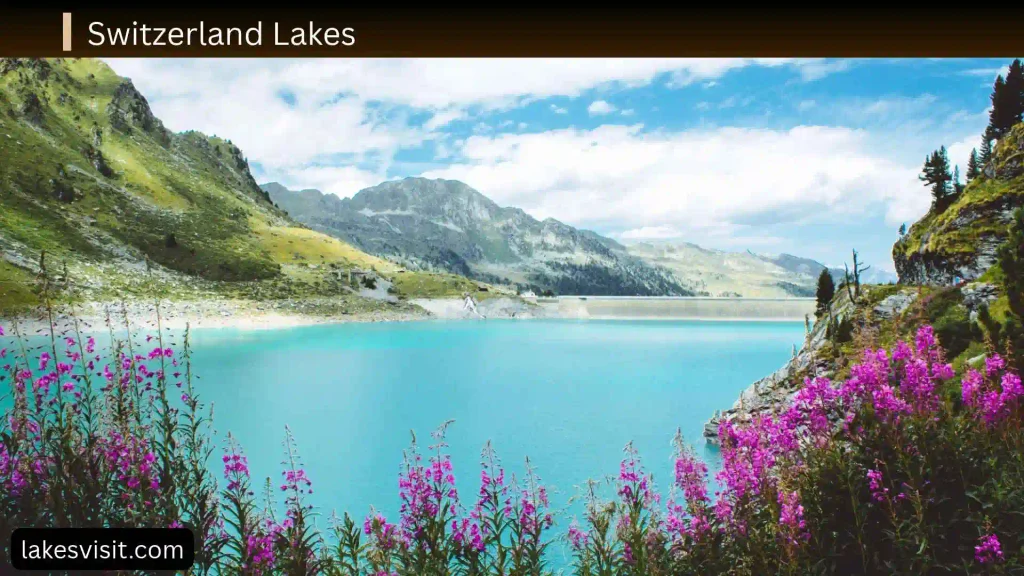
Lake Lucerne
Best for: First-time visitors, mountain scenery, boat trips and combining a lake with a city.
Lake Lucerne is one of the easiest Swiss lakes to recommend because it offers several experiences in one destination. The lake is surrounded by mountains, while the city of Lucerne sits directly on its shore.
The landscape changes considerably around the lake, with bays, mountain slopes and picturesque settlements creating different views throughout a boat journey. Popular mountain destinations such as Rigi and Pilatus can also be incorporated into a lake-focused trip.
A boat trip is one of the best ways to experience Lake Lucerne. Cruises operate from Lucerne, and the lake can be combined with mountain railways and cable cars for a full-day excursion.
What to do:
- Walk around Lucerne’s historic center.
- Take a boat cruise.
- Combine the lake with Mount Rigi.
- Visit Mount Pilatus.
- Stop in lakeside towns such as Weggis or Vitznau.
- Try kayaking, sailing or stand-up paddleboarding in suitable conditions.
How long to stay: One full day works for a quick visit, while two days allow more time for Lucerne and the surrounding mountains.
Lake Brienz
Best for: Turquoise water, photography and dramatic alpine scenery.
Lake Brienz is one of the most visually distinctive lakes in Switzerland. Its turquoise-blue water contrasts strongly with the surrounding mountains, creating the classic alpine scenery many visitors expect from Switzerland.
The lakeside villages of Brienz, Bönigen and Oberried provide different ways to enjoy the shoreline, while viewpoints above the lake offer spectacular perspectives. Boat trips are another excellent option, with services connecting parts of the lake and providing views of the surrounding mountains.
Giessbach Falls is one of the major attractions around Lake Brienz, and the area can easily be included in a day exploring the lake.
What to do:
- Take a boat trip.
- Visit Giessbach Falls.
- Explore Brienz village.
- Hike to viewpoints above the lake.
- Combine the lake with Interlaken and the Bernese Oberland.
How long to stay: One day is enough for the main highlights, although staying nearby gives you more time for hiking and photography.
Lake Geneva
Best for: Cities, vineyards, culture, cruises and a more sophisticated lakeside experience.
Lake Geneva, also known as Lac Léman, is shared by Switzerland and France. On the Swiss side, it connects destinations including Geneva, Lausanne, Vevey and Montreux.
Unlike an isolated alpine lake, Lake Geneva gives travelers a combination of water, vineyards, historic attractions and urban experiences. The Lavaux Vineyard Terraces, a UNESCO World Heritage Site, are one of the area’s standout attractions.
Boat trips are particularly worthwhile. Cruises connect destinations around the lake and provide views of vineyards, waterfront towns, mountains and castles.
What to do:
- Explore Geneva.
- Visit Lausanne.
- Walk through Montreux.
- See Chillon Castle.
- Explore the Lavaux vineyards.
- Take a lake cruise.
- Enjoy a lakeside promenade.
How long to stay: One to two days.
Lake Thun
Best for: Castles, sightseeing, boat trips and Bernese Oberland scenery.
Lake Thun is a particularly good choice if you want a lake experience that includes history as well as mountains. The lake is surrounded by alpine scenery and several important historic attractions.
Boat trips allow visitors to explore different parts of the shoreline, with numerous stops around the lake. The lake’s five castles add another dimension to a sightseeing trip.
Thun itself is worth exploring, while places such as Oberhofen provide additional lakeside attractions.
What to do:
- Cruise across Lake Thun.
- Visit Thun Castle.
- See Oberhofen Castle.
- Explore Thun’s old town.
- Enjoy lakeside walks.
- Combine Lake Thun with Interlaken and Lake Brienz.
How long to stay: One day is suitable for the main attractions.
Lake Zurich
Best for: City travelers, swimming, boating and easy access.
Lake Zurich is a convenient choice if you want lake scenery without traveling deep into the Alps. Zurich sits directly on the lake, making it easy to combine sightseeing with time by the water.
Switzerland Tourism highlights swimming areas, water sports, boat sightseeing and lakeside recreation around Lake Zurich.
For many visitors, the easiest approach is to spend part of the day exploring Zurich and then use the lake for a cruise, walk, picnic or swim during suitable weather.
What to do:
- Take a boat trip.
- Walk along the waterfront.
- Visit Rapperswil.
- Swim at a suitable lido.
- Have a lakeside picnic.
- Try water sports.
How long to stay: Half a day to one day.
Lake Lugano
Best for: Couples, scenic walks and Mediterranean atmosphere.
Lake Lugano is located in southern Switzerland near the Italian border. Its surroundings feel noticeably different from the classic northern Alpine landscape.
The lake is surrounded by mountains but has a distinctly Mediterranean character. Lakeside villages, palms, promenades and Italian-speaking culture give the destination a relaxed atmosphere.
Morcote and Monte San Salvatore are among the attractions commonly associated with the lake, while boat trips provide an easy way to see the scenery from the water.
What to do:
- Explore Lugano.
- Visit Morcote.
- Take a boat trip.
- Hike around the lake.
- Visit Monte San Salvatore.
- Enjoy the lakeside promenade.
How long to stay: One to two days.
Lake Constance
Best for: Families, cycling, towns and longer lakeside trips.
Lake Constance, known locally as Bodensee, is shared by Switzerland, Germany and Austria. It is one of the largest lakes associated with Switzerland and offers a very different experience from high alpine lakes.
Instead of focusing entirely on mountain scenery, a Lake Constance trip can include waterfront towns, cycling, swimming areas, boat excursions and cross-border sightseeing.
The Swiss shoreline is particularly useful for travelers who want a combination of outdoor recreation and cultural stops.
What to do:
- Explore lakeside towns.
- Cycle along the shore.
- Take a boat trip.
- Visit Rorschach.
- Enjoy swimming areas in summer.
- Combine the trip with eastern Switzerland.
How long to stay: One to two days.
Lake Neuchâtel
Best for: Beaches, vineyards and relaxed lake holidays.
Lake Neuchâtel is the largest lake located entirely within Switzerland, covering about 218 square kilometers.
The lake lies in the Jura and Three-Lakes region and provides a calmer alternative to the more heavily visited destinations around Lucerne and Interlaken.
Neuchâtel is a natural base for exploring the area, while places such as Yverdon-les-Bains and Estavayer-le-Lac offer additional lakeside experiences.
What to do:
- Explore Neuchâtel.
- Enjoy lakeside beaches.
- Walk or cycle near the shore.
- Visit vineyards.
- Explore Estavayer-le-Lac.
- Combine the lake with Lake Biel and Lake Murten.
How long to stay: One day.
Lake Walen
Best for: Dramatic mountain scenery and a quieter alternative to the most famous Swiss lakes.
Lake Walen is particularly impressive because steep mountains rise dramatically around the water. The Churfirsten range creates one of the lake’s most recognizable landscapes.
The lake is suitable for hiking, cycling, water activities and boat excursions. A trip to Quinten and the surrounding scenery can make the experience feel considerably more peaceful than visiting a major city lake.
What to do:
- Hike around the lake.
- Take a boat trip.
- Visit Quinten.
- See the surrounding waterfalls.
- Enjoy mountain photography.
How long to stay: Half a day to one day.
Lake Maggiore
Best for: Warm weather, Mediterranean vegetation and combining Switzerland with Italy.
Lake Maggiore extends from the Italian-speaking part of Switzerland into Italy. Its mild climate and Mediterranean vegetation make it one of the country’s most distinctive lake destinations.
Locarno and the surrounding Ticino region provide a strong base for exploring the Swiss section of the lake.
This is an especially good option if you want a lake holiday that feels different from the higher-altitude Alpine destinations.
What to do:
- Explore Locarno.
- Take a lake cruise.
- Visit lakeside villages.
- Enjoy Mediterranean-style scenery.
- Combine the trip with other Ticino attractions.
How long to stay: One to two days.
Lake Biel/Bienne
Best for: Vineyards, cycling and cultural variety.
Lake Biel/Bienne sits in the Jura and Three-Lakes region and is particularly interesting because the area brings together French- and German-speaking Switzerland.
Vineyards line parts of the surrounding landscape, making this a good destination for travelers who prefer relaxed sightseeing, cycling and regional food and wine experiences rather than major mountain excursions.
What to do:
- Explore Biel/Bienne.
- Cycle around the lake.
- Walk through vineyard areas.
- Visit lakeside villages.
- Combine it with Lake Neuchâtel and Lake Murten.
How long to stay: One day.
Lake Murten
Best for: Families, swimming and easy lakeside recreation.
Lake Murten is the smallest of the three major Jura lakes and lies near the medieval town of Murten and the vineyards of Mont Vully.
Its relatively relaxed atmosphere makes it suitable for a day trip, especially when combined with the historic town of Murten.
What to do:
- Explore Murten’s old town.
- Swim at suitable areas.
- Walk or cycle around the lake.
- Enjoy water sports.
- Visit Mont Vully.
How long to stay: Half a day to one day.
Lake Oeschinen
Best for: Alpine scenery, hiking and photography.
Lake Oeschinen is not a large lake like Geneva or Lucerne. Instead, it is a mountain-lake destination where the scenery itself is the main attraction.
The lake near Kandersteg is known for its turquoise-blue water and dramatic alpine surroundings and forms part of the Swiss Alps Jungfrau-Aletsch UNESCO World Heritage Site.
The journey begins in Kandersteg, where a cable car takes visitors toward the lake area. From the upper station, a panoramic trail leads toward the water.
Hiking, picnicking, rowing and bathing are among the activities available depending on conditions and season.
What to do:
- Hike to the lake.
- Enjoy the panoramic viewpoints.
- Have a picnic.
- Rent a rowing boat when available.
- Photograph the turquoise water and mountains.
How long to stay: One full day.
Lake Sils
Best for: Hiking, peaceful landscapes and high-altitude scenery.
Lake Sils is located in the Upper Engadine near St. Moritz and Maloja. It is the largest lake in the canton of Graubünden and forms part of the Upper Engadine lake district.
One of its most unusual features is its scheduled summer passenger boat service. Switzerland Tourism describes it as Europe’s highest passenger boat service.
The lake can also be explored on foot or by bicycle. The broader Upper Engadine lake tour connects several lakes, including the lakes around St. Moritz, Silvaplana and Sils.
What to do:
- Walk around the lake.
- Take the summer boat.
- Explore Sils Maria.
- Cycle through the Engadine.
- Combine the lake with St. Moritz and other Upper Engadine lakes.
How long to stay: One day.
Blausee
Best for: Photography and a short scenic excursion.
Blausee is much smaller than the major Swiss lakes and should be treated as a scenic mountain-lake destination rather than a full lake-holiday base.
Its appeal comes from the intensely clear-looking blue water and forested mountain surroundings. It works particularly well as a short excursion when visiting the Bernese Oberland.
Because Blausee is small, most travelers will not need a full day unless they want to combine it with other nearby attractions.
Which Switzerland Lake Is Best for You?
Best Lake for First-Time Visitors
Choose Lake Lucerne.
It provides one of the most complete combinations of lake scenery, mountains, boat trips and city attractions. You can explore Lucerne, take a cruise and add Rigi or Pilatus without changing your base.
Best Lake for Mountain Scenery
Choose Lake Brienz or Lake Oeschinen.
Lake Brienz is the better choice if you want a large lake that can be explored by boat and combined with villages and other attractions.
Lake Oeschinen is better if your priority is a dramatic mountain-lake setting and hiking.
Best Lake for Swimming
Choose Lake Zurich, Lake Lucerne or Lake Murten, depending on your itinerary.
Swiss lakes offer numerous swimming opportunities, but conditions, designated swimming areas and local rules vary. Switzerland’s government notes that water quality across the country’s lakes is generally very good and that virtually all are clean enough for swimming.
For the best experience, use an official swimming area or lido when available rather than assuming every section of shoreline is suitable.
Best Lake for Couples
Choose Lake Lugano or Lake Geneva.
Lake Lugano offers Mediterranean scenery, mountain views and romantic lakeside towns. Lake Geneva offers elegant waterfronts, vineyards, cruises and destinations such as Montreux.
Best Lake for Families
Choose Lake Lucerne, Lake Zurich, Lake Constance or Lake Murten.
These destinations offer a mixture of easy sightseeing, recreational activities and attractions that do not require demanding mountain hikes.
Best Lake for Photography
Choose Lake Brienz or Lake Oeschinen.
Lake Brienz is especially attractive when turquoise water is contrasted with the surrounding mountains. Lake Oeschinen offers a more dramatic high-alpine setting.
Best Switzerland Lakes Near Popular Cities
Lakes Near Zurich
If you are staying in Zurich, Lake Zurich is the obvious choice because the city is directly connected to the lake.
For a quieter excursion, consider smaller nearby lakes such as Türlersee. Switzerland Tourism describes Türlersee as an idyllic lake not far from Zurich.
Best options:
- Lake Zurich — easiest
- Türlersee — quieter nature
- Lake Zug — good for a broader Central Switzerland trip
Lakes Near Lucerne
Lake Lucerne should be your first choice.
The city and lake are closely connected, and boats provide access to different parts of the lake. Rigi and Pilatus can also be incorporated into a lake-focused day.
For travelers staying in Lucerne, this is one of the easiest places in Switzerland to combine a lake, a city and a mountain excursion.
Lakes Near Interlaken
The two major choices are Lake Thun and Lake Brienz.
Interlaken sits between the two lakes, making the region particularly convenient for travelers who want to experience both.
Boat services also connect with train stations at Thun, Interlaken West, Interlaken Ost and Brienz, making lake sightseeing easier to combine with public transportation.
Lakes Near Geneva
Lake Geneva is the natural choice.
You can combine Geneva with Lausanne, Montreux, Lavaux and Chillon Castle without needing to travel to another region of Switzerland.
Lakes Near Lugano
Lake Lugano is the obvious option, while Lake Maggiore is another excellent choice farther west in Ticino.
Both provide a warmer southern-Swiss atmosphere compared with the higher Alpine lakes.
Lake Brienz vs Lake Thun
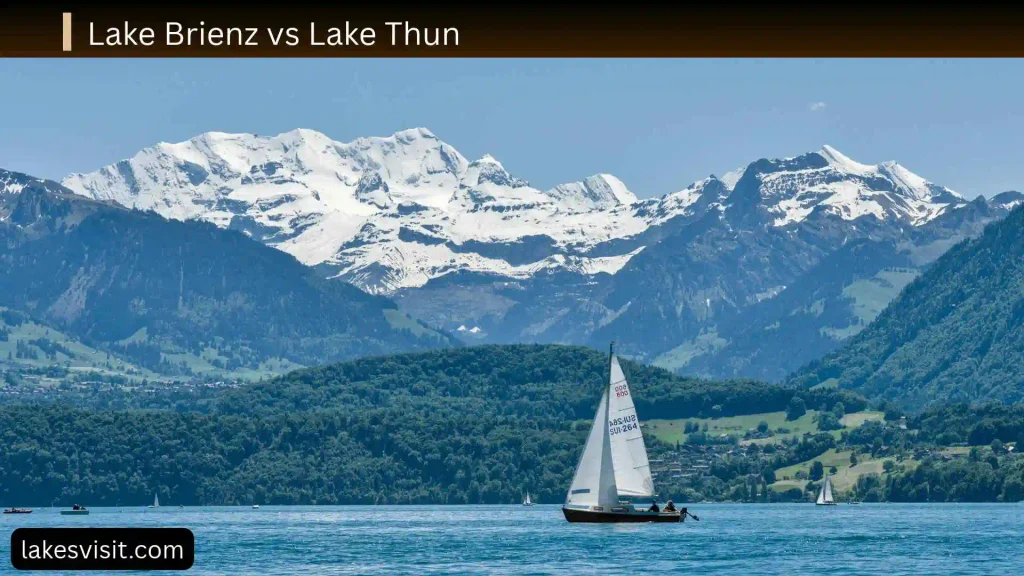
Choose Lake Brienz If…
Choose Lake Brienz if you care most about:
- Turquoise-colored water
- Dramatic mountain scenery
- Photography
- Giessbach Falls
- A quieter, more natural atmosphere
- Combining a lake with Brienz and the eastern side of the Interlaken region
Lake Brienz is particularly memorable for the contrast between its water and surrounding mountains.
Choose Lake Thun If…
Choose Lake Thun if you prefer:
- Castles
- Historic attractions
- Lakeside towns
- Boat sightseeing
- Thun
- Easier access to the western side of the Bernese Oberland
Lake Thun has a stronger sightseeing and historical character, while Lake Brienz generally feels more focused on dramatic natural scenery.
If you have time, visit both. They are close enough to make a combined Lake Thun and Lake Brienz day or multi-day trip practical, and dedicated boat tickets can cover travel on both lakes.
Things to Do at Switzerland Lakes
Take a Boat Cruise
Boat trips are one of the best ways to experience the major Swiss lakes.
Instead of seeing only one section of shoreline, a cruise allows you to view mountains, villages, castles and waterfronts from the water.
Lake Lucerne, Lake Geneva, Lake Thun and Lake Brienz are particularly well suited to this style of sightseeing. Lake Lucerne has scheduled cruises throughout the year, while Lake Geneva offers extensive routes between Swiss and French destinations.
Check current schedules before traveling because services can change by season.
Go Swimming
Swimming is popular at many Swiss lakes during warm weather.
Lake swimming can be very different from swimming in a conventional pool, so check the designated bathing area, weather, water conditions and local rules before entering.
Lidos and organized swimming areas can be particularly convenient for families because they may offer easier access to the water and additional facilities.
Hike
Lake and mountain hiking is one of Switzerland’s strongest combinations.
Lake Oeschinen is particularly well suited to hiking, while Lake Sils has walking and cycling routes around the lake and connections with the wider Upper Engadine lake district.
For easier walks, choose lakes with accessible promenades or established shoreline paths. For mountain routes, check elevation, weather and trail conditions beforehand.
Cycle
Cycling works particularly well around the larger lowland and foothill lakes.
Lake Geneva, Lake Zurich, Lake Constance, Lake Neuchâtel and the Three-Lakes region offer opportunities to combine cycling with towns and other attractions.
The Lakes Route is another major option for serious cyclists and e-bike travelers.
Try Water Sports
Depending on the lake and season, visitors can find opportunities for:
- Kayaking
- Stand-up paddleboarding
- Sailing
- Rowing
- Diving
- Other recreational water activities
Lake Lucerne, for example, offers a broad range of aquatic activities as well as numerous swimming locations.
Always check local regulations and weather conditions before participating.
Visit Lakeside Towns
One of the biggest advantages of Swiss lakes is that many are more than natural attractions.
Lake Geneva connects Geneva, Lausanne, Vevey and Montreux. Lake Lucerne connects the water with Lucerne and mountain destinations. Lake Thun provides access to Thun and several historic sites.
This means you can build a trip around sightseeing rather than simply viewing a lake.
Best Time to Visit Switzerland Lakes
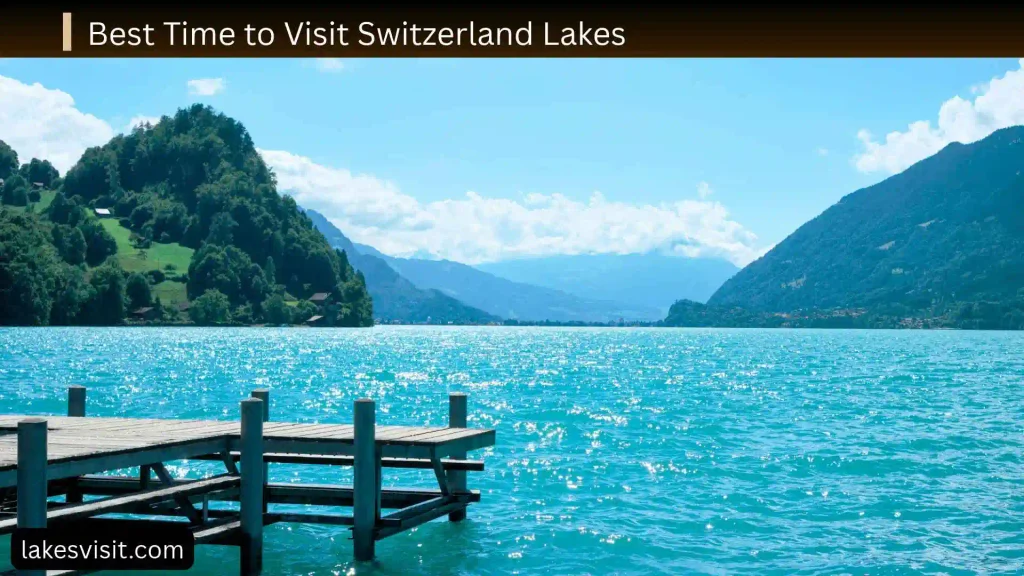
Summer
June to August is generally the most popular period for lake activities.
This is the best season for:
- Swimming
- Boat trips
- Hiking
- Cycling
- Paddleboarding
- Outdoor dining
- Long lakeside days
However, popular destinations can be busy, particularly around Interlaken, Lucerne and the most photographed mountain lakes.
Spring
Spring is a good choice for travelers who prefer fewer crowds and changing landscapes.
Lower-elevation lakes can be pleasant for walking and sightseeing, although mountain areas may still have snow and some higher trails may not yet be suitable.
Autumn
Autumn can be excellent for photography, hiking and scenic drives.
The cooler weather is less suitable for swimming, but the combination of changing foliage and mountain scenery can make lakes such as Lucerne, Thun and the Engadine lakes particularly attractive.
Winter
Winter changes the character of Swiss lakes completely.
Lowland lakes may remain accessible for sightseeing, while high-altitude lakes and surrounding mountain areas can have snow and winter restrictions.
Do not assume that a summer hiking route or boat service operates in winter. Always check the current conditions and seasonal schedules before traveling.
Switzerland Lakes Route
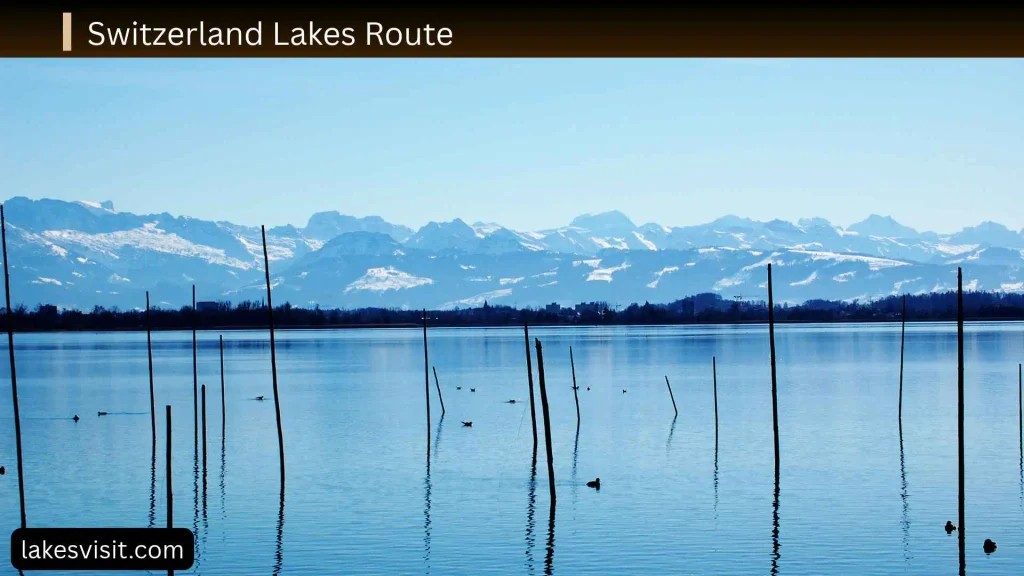
What Is the Lakes Route?
For travelers who want to experience several Swiss lakes in one trip, the official Lakes Route is one of the most interesting options.
The route runs from Montreux to Rorschach, covering about 510 kilometers and passing 10 larger and smaller lakes. It is designed as a multiday cycling route and crosses landscapes ranging from Lake Geneva to Lake Thun, Lake Brienz, Lake Lucerne, Lake Zurich, Lake Walen and Lake Constance.
The official route is divided into 10 stages and has around 6,000 meters of ascent, so it is much more demanding than a simple road trip between lakes.
How to Plan a Lakes Route Trip?
You do not need to complete the entire route to benefit from the idea.
A shorter trip can use selected sections:
Western Switzerland: Lake Geneva and the Montreux area
Bernese Oberland: Lake Thun and Lake Brienz
Central Switzerland: Lake Lucerne
Eastern Switzerland: Lake Zurich, Lake Walen and Lake Constance
If you are cycling the official route, check current weather, closures and route conditions before departure. Switzerland Tourism specifically recommends checking local information because sections can be blocked or interrupted depending on conditions.
Lesser Known Swiss Lakes Worth Visiting
Lake Lungern
Lake Lungern is a good alternative for travelers who want a smaller, more relaxed destination.
Switzerland Tourism highlights the lake for bathing and notes the presence of a swimming area with a sandy beach and water slide.
It can work particularly well as a stop between larger destinations in Central Switzerland.
Lake Gruyère
Lake Gruyère combines water scenery with some of the attractions of the Fribourg region.
Visitors can hike along the shore, paddle toward Ogoz Island and combine the lake with nearby Gruyères, Maison Cailler and Bulle.
This makes it a particularly good choice for travelers interested in food, history and scenery.
Lake Bachalp
Lake Bachalp is a classic mountain-lake option for hikers who want alpine scenery rather than a lakeside town.
It is best approached as a hiking destination rather than a conventional lake holiday.
Lake Staz
Lake Staz near St. Moritz provides another option in the Engadine for travelers who want forest, mountain and lake scenery away from the larger tourist destinations.
It can be combined with the Upper Engadine lakes around St. Moritz.
Lake Derborence
Lake Derborence in Valais is a strong choice for travelers seeking a quieter natural setting.
Switzerland Tourism describes it as a hidden natural paradise surrounded by forests and rugged rock faces.
Because of its more secluded character, it is better suited to travelers who prioritize nature over convenience.
Switzerland Lakes Itinerary
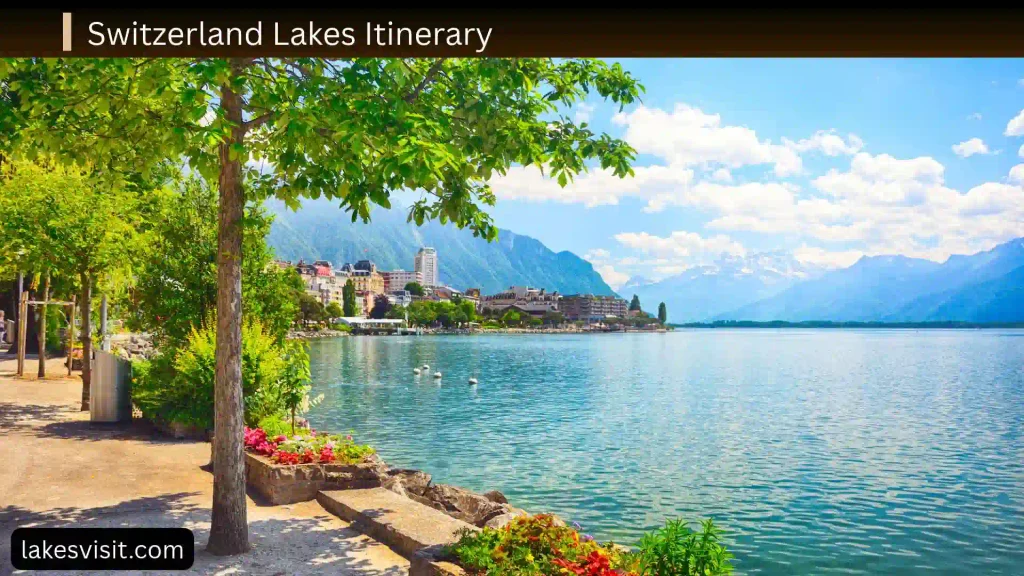
3-Day Itinerary
Day 1: Lucerne and Lake Lucerne
Start in Lucerne, explore the old town and spend the afternoon on Lake Lucerne.
If conditions and schedules allow, add a short mountain excursion.
Day 2: Lake Brienz and Interlaken
Travel toward the Interlaken region and spend the day around Lake Brienz.
Visit Brienz, take a boat trip and see Giessbach Falls.
Day 3: Lake Thun
Explore Lake Thun by boat and visit Thun or one of the lakeside castles.
This itinerary works well for first-time visitors because it combines two major lake regions with mountain scenery and historic towns.
5-Day Itinerary
Day 1: Zurich and Lake Zurich
Day 2: Lucerne and Lake Lucerne
Day 3: Lake Brienz and Interlaken
Day 4: Lake Thun
Day 5: Lake Geneva around Lausanne or Montreux
This route provides a broad introduction to Swiss lakes without trying to visit too many destinations in one day.
7-Day Itinerary
Day 1: Zurich and Lake Zurich
Day 2: Lake Lucerne
Day 3: Lake Lucerne plus Rigi or Pilatus
Day 4: Lake Brienz and Interlaken
Day 5: Lake Thun
Day 6: Lake Geneva and Lausanne
Day 7: Montreux, Lavaux and a Lake Geneva cruise
For a more mountain-focused seven-day trip, replace Lake Geneva with Lake Oeschinen and spend an additional day around the Bernese Oberland.
Frequently Asked Questions
How many lakes are there in Switzerland?
Switzerland has around 1,500 lakes. The country also has an extensive network of rivers and streams and holds a significant share of Europe’s freshwater reserves.
What is the most beautiful lake in Switzerland?
There is no objective answer because beauty depends on what you want to see.
For turquoise water and dramatic mountains, Lake Brienz is a strong choice. For a high-alpine setting, Lake Oeschinen stands out. For a combination of lake, mountains and city sightseeing, Lake Lucerne is difficult to beat.
Which lake is best for first-time visitors?
Lake Lucerne is one of the best all-around choices.
You can combine a lake cruise with Lucerne’s historic city center and excursions to mountains such as Rigi or Pilatus.
Can you swim in Swiss lakes?
Yes. Swimming is possible in many Swiss lakes, particularly during warmer months, and there are numerous designated bathing areas.
Water conditions and local rules vary, so use official swimming areas where possible and check conditions before entering the water.
Which Swiss lake has the bluest water?
Lake Brienz and Lake Oeschinen are two of the strongest choices if your priority is striking blue or turquoise-looking water.
The appearance of lake water changes with weather, sunlight, season and viewing angle, so photographs should not be treated as a guarantee of the exact color you will see.
What are the best lakes near Interlaken?
Lake Thun and Lake Brienz are the main choices.
They are on opposite sides of Interlaken and are particularly convenient because train and boat connections can be combined around the region.
What are the best lakes near Zurich?
Lake Zurich is the easiest option because Zurich sits directly on its shore.
For a quieter excursion, Türlersee is another possibility near Zurich.
Which Switzerland lakes are best for families?
Lake Lucerne, Lake Zurich, Lake Constance and Lake Murten are good family-oriented choices because they combine accessible sightseeing with recreational activities.
Lake Oeschinen can also work well for families who are comfortable with mountain excursions, but trail and weather conditions should be checked beforehand.
What is the best time to visit Swiss lakes?
Summer is generally the best season for swimming, boating, hiking and other outdoor activities.
Spring and autumn are better for travelers who prefer cooler weather and potentially fewer visitors, while winter offers a very different snow-covered landscape.
Always check seasonal transport, boat schedules and mountain trail conditions before traveling.
Conclusion
Switzerland’s lakes are not all the same, and choosing the right one can make a major difference to your trip.
A first visit, choose Lake Lucerne. Turquoise water and mountain scenery, choose Lake Brienz. For castles and sightseeing, choose Lake Thun. For cities and vineyards, choose Lake Geneva. For a Mediterranean atmosphere, choose Lake Lugano or Lake Maggiore. And for a true alpine mountain-lake experience, put Lake Oeschinen or Lake Sils on your list.
You also do not have to choose just one. Switzerland’s excellent transport network and the concentration of lakes in regions such as Central Switzerland, the Bernese Oberland and the Three-Lakes region make it possible to experience several very different lakes during the same vacation.
If your goal is to see the greatest variety, a route combining Lake Lucerne, Lake Brienz, Lake Thun and Lake Geneva is an excellent starting point. If you have more time, add Lake Zurich, Lake Lugano, Lake Oeschinen or Lake Sils to see another side of Switzerland’s remarkable lake landscape.