
If you’re anything like I am, you’ve probably dreamed of escaping busy cities and spending time somewhere peaceful, surrounded by untouched wilderness. I am always fascinated by places that offer breathtaking scenery, crystal-clear lakes, and unforgettable outdoor adventures, and Bowron Lakes is one of those rare destinations that truly delivers. Whether you’re planning a canoe circuit, looking for incredible wildlife encounters, or simply searching for a quiet place to reconnect with nature, this stunning park has something special waiting for you.
In this guide, I’ll explore everything you need to know about Bowron Lakes, including its famous canoe circuit, top attractions, best time to visit, camping options, wildlife, and practical travel tips. By the end, you’ll have all the information you need to decide if Bowron Lakes deserves a spot on your travel bucket list.
What Are the Bowron Lakes?
The term “Bowron Lakes” is commonly associated with the Bowron Lake Canoe Circuit, a wilderness route located inside Bowron Lake Park in British Columbia.
The circuit connects a series of lakes and waterways through the Cariboo Mountain landscape. It is famous for its interconnected paddling route, mountain scenery, wildlife, remote campsites, and portages.
BC Parks describes the circuit as a 116-kilometre chain of waterways and connecting land. The full route normally takes six to 10 days, while the West Side offers a shorter two-to-four-day alternative.
This distinction is important because Bowron Lakes is not simply a destination where visitors arrive for a few hours of sightseeing. Most travelers searching for the destination are interested in experiencing the wilderness circuit itself.
Where Are Bowron Lakes Located?

Bowron Lake Park is located in east-central British Columbia in the Cariboo Mountain Range.
The park is a remote wilderness area, which is an important part of its appeal. Visitors should expect a very different experience from a developed campground near a city.
The park is accessible by road, but the canoe circuit itself takes travelers deep into the backcountry. Once paddlers begin the circuit, ordinary conveniences become limited.
The nearest larger communities can be useful for organizing supplies and transportation before entering the park, while Barkerville is another well-known nearby attraction that can be combined with a Bowron Lakes trip.
What Is the Bowron Lake Canoe Circuit?
The Bowron Lake Canoe Circuit is a multi-day wilderness paddling route through Bowron Lake Park.
The complete circuit covers approximately 116 kilometres of waterways and connecting land. It includes extensive lake paddling, river sections, and portage trails.
BC Parks describes the circuit as a wilderness journey and recommends it for people with previous backcountry canoeing experience.
The route is popular because paddlers can travel through a changing landscape without repeatedly returning to a road or urban area. A typical trip involves:
- Paddling across large lakes
- Navigating river sections
- Carrying a canoe and equipment over portages
- Camping at designated backcountry sites
- Fishing
- Wildlife watching
- Hiking
- Waiting for weather when conditions are unsuitable for paddling
The combination of paddling and portaging is what makes the Bowron Lake Canoe Circuit different from an ordinary canoe day trip.
How Long Does the Bowron Lakes Circuit Take?
The full Bowron Lake Canoe Circuit generally takes six to 10 days.
The actual time depends on paddling experience, weather, route planning, physical condition, group size, and how much time you want to spend enjoying the campsites and surrounding scenery.
A shorter option is available on the West Side.
Full Circuit
The full circuit is approximately 116 kilometres and is normally planned as a multi-day wilderness trip.
A six-day itinerary requires more efficient travel, while a longer itinerary gives travelers greater flexibility for weather delays and relaxed paddling days.
It is generally better to build some flexibility into the schedule rather than assuming every day will have perfect conditions.
West Side Circuit
The West Side is approximately 45% of the total circuit and can be completed in roughly two to four days.
BC Parks describes it as a good alternative for less experienced paddlers or people who have only a few days available.
However, shorter does not mean effortless. You are still entering a wilderness environment and need appropriate paddling, camping, navigation, and safety skills.
How Difficult Is Bowron Lakes?
Bowron Lakes should not be treated as a casual beginner canoe trip.
BC Parks recommends previous backcountry canoeing experience, and its paddling guidance describes the circuit as a wilderness journey suitable for intermediate and advanced paddlers who are in good physical condition.
The difficulty comes from several factors.
Long Paddling Days
The full circuit involves more than 100 kilometres of paddling.
Even experienced paddlers can find repeated days on the water physically demanding, especially when carrying camping equipment.
Portages
The route includes approximately 11 kilometres of portage trails.
During a portage, you need to move the canoe and your equipment between waterways. Wet conditions can make trails muddy and more difficult.
Weather
Wind, rain, and sudden storms can affect travel.
A route that looks manageable on a map may take longer if strong winds make a lake unsafe to cross.
Remote Conditions
There is no normal road access throughout the circuit. Travelers must be self-sufficient and prepared to spend additional time in the backcountry if weather changes their plans.
Full Circuit vs. West Side
Choosing the right route is one of the most important decisions for a Bowron Lakes trip.
| Feature | Full Circuit | West Side |
| Approximate duration | 6–10 days | 2–4 days |
| Distance | About 116 km | About 45% of full circuit |
| Experience | Best for experienced paddlers | More accessible |
| Trip style | Complete wilderness circuit | Shorter introduction |
| Best for | Longer adventure | Limited vacation time |
The full circuit provides the complete experience, while the West Side can be a better choice for travelers who cannot commit to a week or more.
BC Parks specifically notes the West Side as an option for less experienced paddlers.
Understanding the Portages
Portaging is an essential part of the Bowron Lakes experience.
The circuit contains approximately 11 kilometres of portage trails. These trails allow paddlers to travel between waterways and avoid sections of moving water that are not appropriate for paddling.
Portages can vary in difficulty depending on weather, trail conditions, canoe weight, and how much equipment your group carries.
Rain can make trails muddy, while carrying a heavily loaded canoe can turn even a relatively short portage into a demanding task.
What Should You Expect on a Portage?
A portage generally means:
- Unload or organize your gear.
- Move equipment across the trail.
- Carry or cart the canoe.
- Reassemble your load at the other side.
- Continue paddling.
Travelers should pack with portaging in mind. Lightweight, compact equipment can make a major difference.
Using a Canoe Cart
Canoe carts are permitted on the circuit, but BC Parks places restrictions on their use.
The maximum permitted axle width is 75 centimetres, and when using a cart, the canoe’s cargo cannot exceed 28 kilograms. Equipment above that limit must be carried separately. Wide-track tires are recommended.
A cart can make portaging more manageable, particularly for travelers carrying a heavier canoe and camping load.
Are There River Sections on the Circuit?
Yes.
The Bowron Lakes trip is not entirely calm-water paddling.
BC Parks warns that the Isaac and Cariboo Rivers contain high-volume moving water and hazards such as sweepers and deadheads. Whitewater of Class 2 or higher has portage trails around it.
This is one reason previous wilderness paddling experience is recommended.
Paddlers should understand how to maneuver their canoe and recognize hazards before attempting the full circuit.
Camping at Bowron Lakes
Camping is an important part of the Bowron Lakes experience.
This is backcountry camping rather than a conventional drive-in campground vacation. Camping is allowed only at established campsites and designated tent pads along the circuit.
Tent pads are limited in size and capacity, so groups should understand the rules before planning their trip.
Travelers should be prepared to:
- Carry their own camping equipment
- Prepare their own meals
- Store food properly
- Protect equipment from rain
- Follow campsite rules
- Manage waste responsibly
- Remain flexible when weather affects the route
The goal is to leave the backcountry in the same condition you found it.
Bowron Lakes Reservations
Reservations are one of the most important parts of planning a Bowron Lakes trip.
BC Parks requires advance camping reservations for overnight travel on the Bowron Lake Canoe Circuit. The circuit is extremely popular, and daily departures are limited.
A standard reservation can secure an arrival date for a party of up to six people.
Parties of seven to 14 people require a group reservation.
When Should You Book?
BC Parks recommends making a reservation at least three months in advance if you want the dates you prefer.
For popular summer dates, planning even earlier can be sensible because demand is high.
Do not assume that you can arrive without a reservation and automatically begin the circuit.
Named Occupant
When making a reservation, a named occupant must be identified.
The named occupant must be present when the group arrives and throughout the trip. They may also be asked to provide identification during registration.
This is an important detail for groups because the reservation cannot simply be treated as a transferable booking.
Orientation Requirement
Before starting the circuit, paddlers must attend an orientation session.
BC Parks states that orientation sessions are held at the visitor centre daily from 8 AM to noon. Missing the orientation on the first reserved day can result in cancellation without a refund.
This means travelers should plan their arrival carefully instead of treating the first day as a flexible arrival day.
Bowron Lakes Cost and Fees
The basic park fees are separate from equipment rental and the broader cost of traveling to British Columbia.
Current BC Parks fees include:
- $60 per person for the full circuit
- $30 per person for the West Side
- $18 vessel transaction fee per canoe
- $6 fee for a reservation change or cancellation
- $5 additional surcharge for transactions made through the call centre
These charges do not include canoe or equipment rental.
Other Trip Costs
Your total Bowron Lakes budget may also include:
- Transportation to the park
- Fuel
- Food
- Canoe rental
- Kayak rental
- Canoe cart rental
- Camping equipment
- Accommodation before or after the trip
- Emergency supplies
- Additional travel expenses
Beginning in 2027, BC Parks states that visitors from outside British Columbia will also pay an additional $20 non-resident fee for Bowron Lake Canoe Circuit reservations.
Because fees and policies can change, confirm current charges before making a reservation.
Bowron Lakes Cancellation Policy

Cancellation rules matter because the circuit is booked well in advance.
For the Bowron Lake Canoe Circuit, BC Parks currently states that camping fees are refundable when a reservation is canceled more than 28 days before arrival. Within 28 days of arrival, camping fees are not refundable.
Transaction fees are non-refundable.
Travelers should therefore avoid making a reservation until they are confident about their dates.
Best Time to Visit Bowron Lakes
There is no single best month for every traveler.
Your ideal timing depends on whether you prioritize warmer weather, fewer people, wildlife, scenery, or flexibility.
Late Spring and Early Summer
Earlier in the season can offer a quieter experience, but travelers should be prepared for cooler temperatures and variable conditions.
Cold water and changing weather make proper clothing and safety equipment essential.
July and August
These are popular summer months and can offer a classic warm-weather paddling experience.
The disadvantage is demand. Because departures are limited and the circuit is highly popular, travelers interested in peak summer dates should plan well ahead.
September
September can appeal to people looking for a quieter wilderness experience.
However, nights can be colder and weather conditions may become less predictable as the season progresses.
The best month therefore depends on what you value most rather than one universal answer.
Weather Conditions at Bowron Lakes
Weather can dramatically change a Bowron Lakes itinerary.
BC Parks warns that winds and cold, rainy weather can occur throughout the summer. Storms may develop quickly, and paddlers may need to remain ashore until conditions improve.
This means you should not create an itinerary where every day depends on covering a specific distance.
A flexible schedule is safer and more enjoyable.
What If Bad Weather Delays You?
Carry enough food for additional days.
BC Parks specifically recommends bringing enough extra food to last at least a couple of days in case weather forces you to remain at camp.
That extra food should be considered part of your essential equipment rather than an optional luxury.
Water Safety at Bowron Lakes
Cold water is one of the most important safety considerations.
BC Parks advises paddlers to stay close to shore because the lakes are very cold and a capsize far from shore can have severe consequences.
Wearing a properly fitted personal flotation device is essential.
Paddlers should also avoid assuming that calm-looking water is automatically safe. Wind can increase rapidly, and large lakes can become difficult to cross when conditions change.
There are no lifeguards on duty in BC Parks.
Cell Service and Emergency Communication
One of the biggest differences between Bowron Lakes and an ordinary vacation destination is communication.
BC Parks states that there is no cellphone reception on the Bowron Lake Canoe Circuit. Six public two-way radios are positioned around the circuit for emergency use.
Visitors may also bring their own registered communication system, subject to park rules.
This means travelers should not depend on their smartphone as their only emergency plan.
Before leaving, make sure someone outside the group knows your itinerary and expected return date.
Wildlife at Bowron Lakes
Wildlife is one of the attractions of Bowron Lake Park, but it also creates responsibilities.
Both black bears and grizzly bears occur in the park. BC Parks provides bear-proof food caches at designated campsites and requires visitors to use them.
Travelers should:
- Keep food secured
- Never intentionally feed wildlife
- Keep campsites clean
- Follow food-storage rules
- Give wildlife plenty of space
- Learn appropriate bear-safety practices before departure
Wildlife viewing is most enjoyable when animals are observed from a safe distance without disturbing them.
What to Pack for Bowron Lakes
Packing for Bowron Lakes requires more thought than packing for a normal campground.
Paddling Equipment
Consider:
- Canoe or suitable kayak
- Paddles
- Personal flotation devices
- Dry bags
- Bail-out or emergency equipment
- Appropriate repair supplies
Camping Equipment
Bring suitable:
- Tent
- Sleeping bag
- Sleeping pad
- Stove
- Cooking equipment
- Fuel
- Headlamp
- Basic repair kit
Clothing
Weather can change quickly, so pack:
- Waterproof outer layers
- Warm clothing
- Quick-drying clothing
- Extra socks
- Dry camp clothes
- Hat and gloves appropriate for conditions
Safety and Navigation
Important items can include:
- Detailed map
- Compass
- First-aid supplies
- Emergency communication equipment
- Headlamp
- Fire-starting equipment where permitted
- Extra food
The exact equipment list should be adapted to your group, route, season, and experience.
What Food Should You Bring?
Food planning is especially important because you may be delayed by weather.
Choose food that is:
- High in energy
- Nutritionally balanced
- Easy to prepare
- Lightweight
- Resistant to moisture
- Easy to pack securely
BC Parks specifically recommends carrying enough additional food to cover at least a couple of extra days if weather prevents travel.
Travelers should also follow the park’s packaging and waste rules. For example, BC Parks states that commercially packaged beverages and glassware are prohibited on the Canoe Circuit.
Canoe or Kayak: Which Is Better?
Both canoes and kayaks are used on the Bowron Lake Canoe Circuit.
A canoe is a particularly common choice because it can carry two people and a substantial amount of camping equipment.
BC Parks notes that 16- to 18-foot tandem canoes are commonly used and that canoes and kayaks can be rented through local outfitters and the park operator during the summer season.
Why Choose a Canoe?
A canoe can provide:
- Good cargo capacity
- Space for two paddlers
- Convenient gear organization
- A traditional wilderness-canoeing setup
Why Choose a Kayak?
A kayak can be useful for:
- Solo paddlers
- Travelers comfortable with kayak handling
- People who prefer a lower-profile craft
However, equipment choice should take portaging into account.
The best boat is not necessarily the one that performs best on the water; it also needs to work for the land sections of the trip.
Can You Rent Canoes at Bowron Lakes?
Yes.
BC Parks states that canoes, kayaks, wall tents, and canoe carts are available for rental during the summer through local outfitters and through the park operator.
Renting can be convenient for travelers who do not live nearby or do not want to transport a canoe long distances.
When arranging a rental, confirm:
- Pickup location
- Return location
- Equipment included
- Cart availability
- Paddles and PFDs
- Rental period
- Damage policy
- Reservation requirements
Things to Do at Bowron Lakes
Canoeing is the main reason most people visit, but it is not the only activity.
Canoeing and Kayaking
Paddling is the defining experience.
The route provides access to a series of lakes and waterways surrounded by wilderness scenery.
Fishing
Fishing can be an enjoyable part of a Bowron Lakes trip.
However, anglers should review current British Columbia fishing regulations, licensing requirements, seasonal restrictions, and park-specific rules before fishing.
Swimming
Swimming can be part of the wilderness experience, particularly during warmer weather.
However, there are no lifeguards, and water temperatures can be very cold.
Anyone entering the water should understand the conditions and avoid treating a remote lake like a supervised swimming facility.
Hiking
Although paddling dominates the route, hiking opportunities are also available.
BC Parks identifies trails to Harold Falls, Cariboo Falls, and Hunter Lake.
These walks can add variety to a longer trip.
Photography and Wildlife Watching
The combination of mountains, lakes, forests, wildlife, and changing weather creates excellent opportunities for photography.
The remote environment also makes the trip attractive to travelers who want to spend several days away from busy urban settings.
Getting to Bowron Lake Park
Getting to Bowron Lake Park requires planning because the destination is remote.
The park lies in east-central British Columbia in the Cariboo Mountain Range.
Travelers should organize fuel, food, equipment, and any overnight accommodation before entering the remote area.
Do not assume that every item you need will be available immediately near the circuit.
What Should You Do Before Driving to the Park?
Before departure:
- Check current road conditions
- Confirm your reservation
- Check the weather
- Pick up rental equipment
- Buy food and fuel
- Confirm your orientation timing
- Tell someone your itinerary
- Check the latest BC Parks notices
Good preparation is particularly important because cellphone service is unavailable on the circuit.
Bowron Lakes and Barkerville
Barkerville Historic Town is one of the most useful nearby attractions to consider when planning a Bowron Lakes trip.
BC Parks specifically mentions visiting Barkerville as one activity available to travelers waiting for an opening on the circuit.
Combining the two destinations can turn a paddling trip into a broader British Columbia adventure.
A practical itinerary could include time in the region before or after the canoe circuit rather than trying to fit sightseeing into an already demanding paddling schedule.
Is Bowron Lakes Good for Beginners?
The answer depends on what “beginner” means.
Someone who is completely new to wilderness canoeing should not assume the full circuit is an appropriate first paddling adventure.
BC Parks recommends previous backcountry canoeing experience.
The West Side is a more approachable alternative because it is shorter and does not involve the same level of commitment as the complete circuit.
Even then, travelers should have basic paddling and camping skills and be comfortable with changing weather and remote conditions.
If you have never handled a loaded canoe, practiced rescue techniques, or camped in the backcountry, gaining experience before attempting Bowron Lakes is a sensible approach.
Who Should Choose the Full Circuit?
The full circuit is best suited to travelers who:
- Have previous wilderness canoeing experience
- Are comfortable with multi-day camping
- Can handle portages
- Have appropriate equipment
- Can manage changing weather
- Want a longer wilderness adventure
- Have enough vacation time for a flexible itinerary
The full circuit rewards preparation because travelers get to experience the complete route rather than only one section.
Who Should Choose the West Side?
The West Side can be a better choice for:
- Travelers with limited vacation time
- Paddlers who want a shorter introduction
- People who prefer a less demanding itinerary
- Groups that are not ready for the complete circuit
- Travelers who want two to four days rather than a week or longer
BC Parks specifically describes the West Side as a good alternative for less experienced paddlers and those with only two to four days available.
What Travelers Often Get Wrong About Bowron Lakes
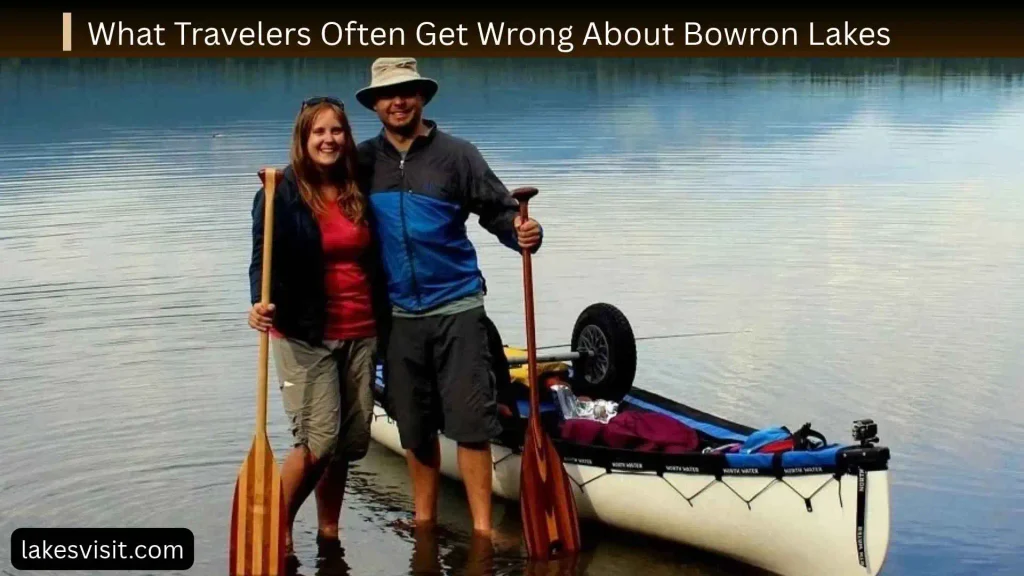
There are several misconceptions worth clearing up before a trip.
Bowron Lakes Is Not a Simple Sightseeing Destination
You cannot approach the full experience like a normal day trip.
It is a wilderness canoe journey requiring preparation.
The 116 Kilometres Are Not All Paddling
The official route includes waterways and connecting land.
Approximately 11 kilometres are portage trails.
Shorter Does Not Mean Easy
The West Side takes two to four days, but it remains a wilderness trip.
Weather Can Change Your Schedule
Strong winds and storms may force paddlers to stay at camp rather than continue.
Cell Service Is Not Available
Do not build your emergency plan around ordinary cellphone coverage.
You Need to Think About Portaging When Packing
A heavy canoe and overloaded gear can make the land sections significantly more demanding.
Reservations Are Not Optional for Overnight Circuit Travel
Advance reservation is required for overnight travel on the circuit.
Is Bowron Lakes Worth the Trip?
For the right traveler, Bowron Lakes can be an exceptional wilderness experience.
It is particularly well suited to people who enjoy:
- Canoeing
- Backcountry camping
- Wildlife
- Remote landscapes
- Photography
- Fishing
- Hiking
- Multi-day outdoor adventures
It may be less suitable for people who:
- Want a resort-style vacation
- Need reliable cellphone service
- Dislike carrying equipment
- Have no wilderness camping experience
- Want an easy one-day attraction
- Are uncomfortable changing plans because of weather
The biggest attraction is not one individual lake or viewpoint. It is the experience of moving through a connected wilderness landscape under your own power.
Frequently Asked Questions About Bowron Lakes
Where are Bowron Lakes?
Bowron Lakes are associated with Bowron Lake Park in east-central British Columbia’s Cariboo Mountain Range. The area is best known for the Bowron Lake Canoe Circuit.
How long is the Bowron Lake Canoe Circuit?
The full circuit is approximately 116 kilometres, including waterways and connecting land.
How many days do you need for Bowron Lakes?
The full circuit generally takes six to 10 days. The West Side can be completed in approximately two to four days.
Is Bowron Lakes difficult?
Yes. It is a wilderness paddling trip that involves long distances, portages, changing weather, and remote conditions. BC Parks recommends previous backcountry canoeing experience.
Is the West Side easier?
The West Side is shorter and is described by BC Parks as a good alternative for less experienced paddlers or travelers with only two to four days. It is still a wilderness trip requiring proper preparation.
Do you need a reservation for Bowron Lakes?
Yes. Advance camping reservations are required for overnight travel on the Bowron Lake Canoe Circuit.
How far ahead should you book?
BC Parks recommends booking at least three months ahead if you want your preferred dates.
How much does the Bowron Lake Canoe Circuit cost?
Current BC Parks camping fees are $60 per person for the full circuit and $30 per person for the West Side, with additional vessel and transaction fees. Equipment rental is separate.
Can you rent a canoe?
Yes. BC Parks states that canoes, kayaks, wall tents, and canoe carts are available for rental through local outfitters and the park operator during the summer.
Are there portages?
Yes. The circuit includes approximately 11 kilometres of portage trails.
Can you use a canoe cart?
Yes, but BC Parks has restrictions on canoe-cart dimensions and cargo weight.
Is there cellphone service?
There is no cellphone reception on the Bowron Lake Canoe Circuit. BC Parks has placed six public two-way radios around the circuit for emergency use.
Are there bears at Bowron Lakes?
Yes. Both black bears and grizzly bears are found in Bowron Lake Park. Bear-proof food caches are provided at designated campsites and must be used.
Can you swim at Bowron Lakes?
Swimming can be part of the trip, but the lakes are very cold and there are no lifeguards. Travelers should treat swimming as a wilderness activity and understand the water conditions.
Can you fish at Bowron Lakes?
Fishing is possible, but anglers should check current British Columbia fishing regulations and licensing requirements before the trip.
What should you pack for Bowron Lakes?
Essential categories include a suitable canoe or kayak, paddling equipment, PFDs, tent, sleeping system, cooking equipment, warm and waterproof clothing, navigation tools, first-aid supplies, emergency communication equipment, food, and extra supplies for weather delays.
What happens if bad weather stops you?
You may need to remain at your campsite until conditions improve. This is why BC Parks recommends carrying enough extra food for at least a couple of additional days.
Final Thoughts
Bowron Lakes is much more than a collection of scenic lakes. The destination is defined by the Bowron Lake Canoe Circuit, a demanding but rewarding wilderness route through British Columbia’s Cariboo Mountains.
The full circuit covers approximately 116 kilometres and generally takes six to 10 days, while the West Side provides a shorter two-to-four-day option. Both require preparation, but the West Side can be a more practical choice for travelers with less time or experience.
The most important things to plan are your reservation, route, equipment, food, weather flexibility, paddling ability, and safety strategy. Portages account for roughly 11 kilometres of the journey, cellphone service is unavailable on the circuit, and wildlife and cold-water conditions require responsible preparation.
For experienced outdoor travelers seeking a genuine multi-day canoe adventure, Bowron Lakes offers the chance to slow down, paddle through remote wilderness, camp beside the water, and experience British Columbia far away from ordinary tourist routes.